Poison Dart Frogs
The most brilliantly colored amphibians on Earth — and the ones most people get completely wrong.
What are poison dart frogs?
Poison dart frogs belong to the family Dendrobatidae, a diverse group of small, diurnal (day-active) frogs native to the tropical forests of Central and South America. The family contains approximately 214 described species across 16 genera (AmphibiaWeb, 2024), including the well-known genera Dendrobates, Phyllobates, Oophaga, Ranitomeya, Adelphobates, and Epipedobates.
A commonly confused look-alike is the golden mantella (Mantella aurantiaca) from Madagascar — it resembles a dart frog in color and size but belongs to an entirely separate family (Mantellidae) and is not a dendrobatid. It independently evolved warning coloration through convergent evolution.
Why are they poisonous?
Dart frogs are aposematic — their vivid colors signal toxicity to predators. The toxins are not produced by the frogs themselves; they are dietary alkaloids sequestered from specialised prey items in the wild, primarily oribatid mites, formicine ants, and millipedes. Different genera accumulate different classes of alkaloids: batrachotoxins (Phyllobates), pumiliotoxins (Oophaga), and histrionicotoxins (Dendrobates), among many others.
This dietary origin is why captive-bred dart frogs are non-toxic — without the specific wild invertebrate diet, no alkaloids accumulate.
The most poisonous: Phyllobates terribilis
The golden poison frog (Phyllobates terribilis) from the Pacific coast of Colombia is considered the most toxic vertebrate on Earth. A single wild individual carries enough batrachotoxin (BTX) to kill multiple adult humans. Indigenous Emberá people historically used its secretions to poison blowgun darts — the origin of the common name "dart frog."
Captive-bred P. terribilis are completely non-toxic and are kept as pets by experienced dart frog keepers.
Popular pet dart frog species
Most dart frogs kept in captivity belong to just a handful of well-established captive-bred species. All are non-toxic in captivity. Beginners should start with the hardier communal species (Green-and-Black, Yellow-Banded) before attempting territorial or advanced thumbnail frogs.
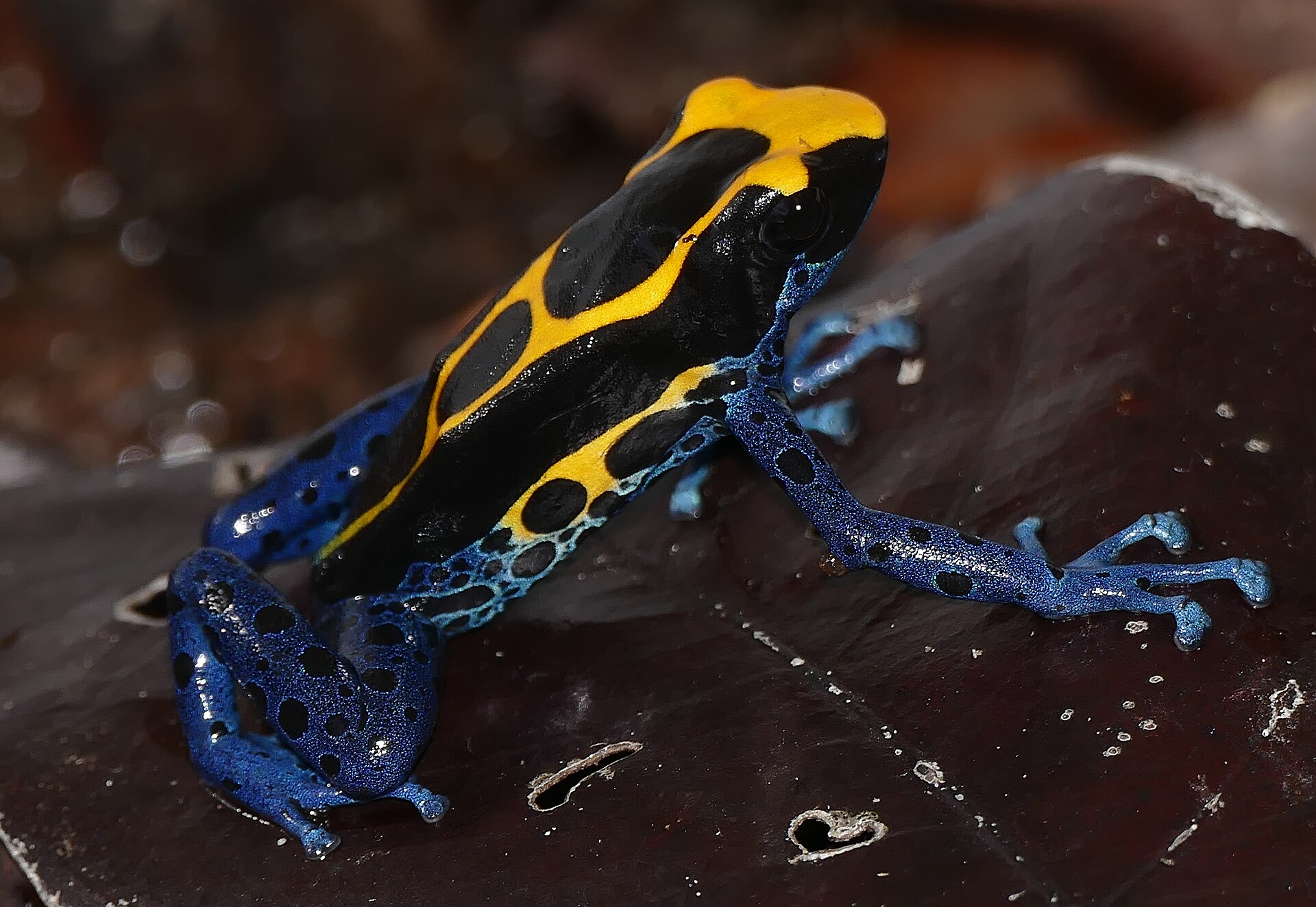 Dyeing Dart Frog
 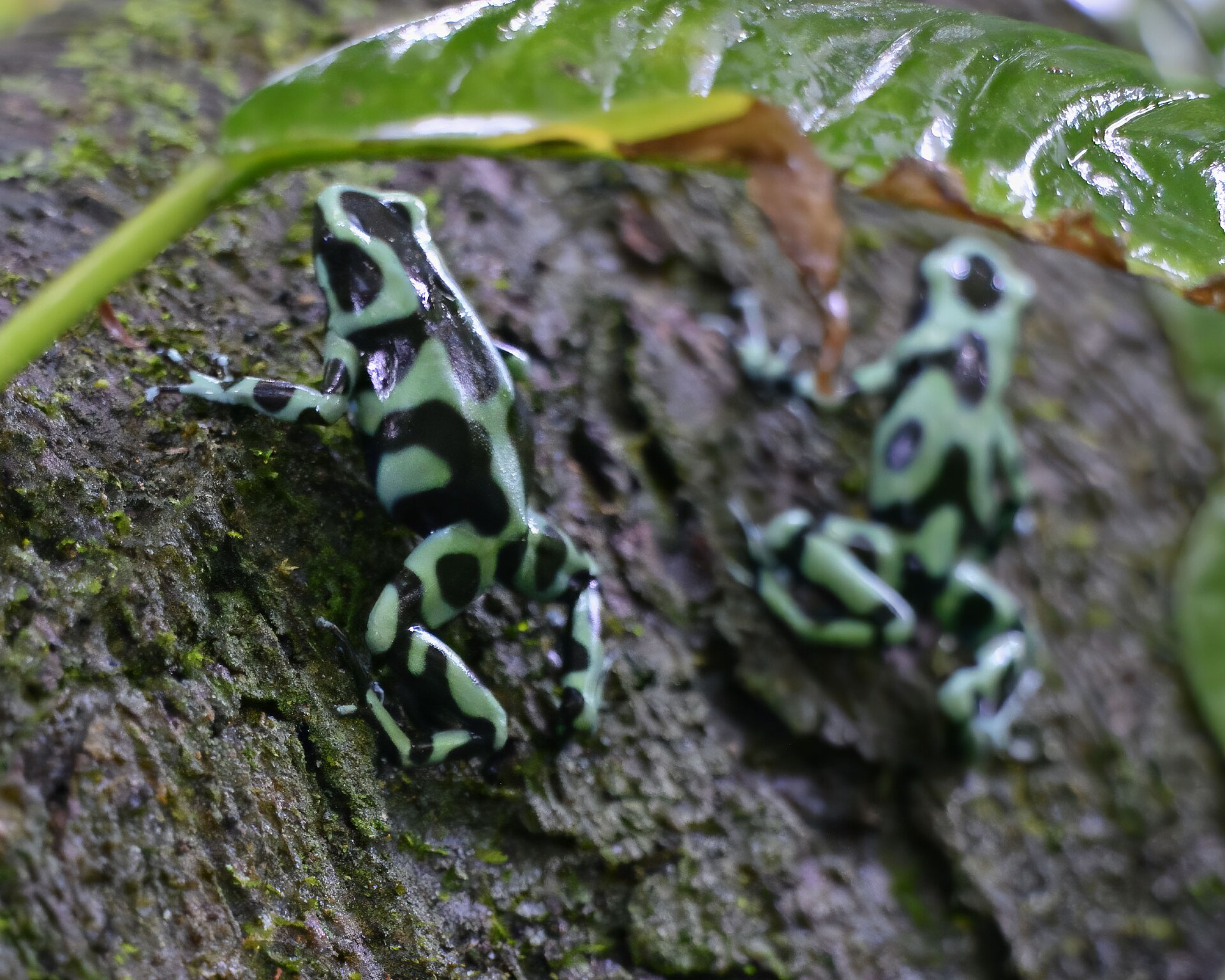 Green-and-Black Dart Frog
 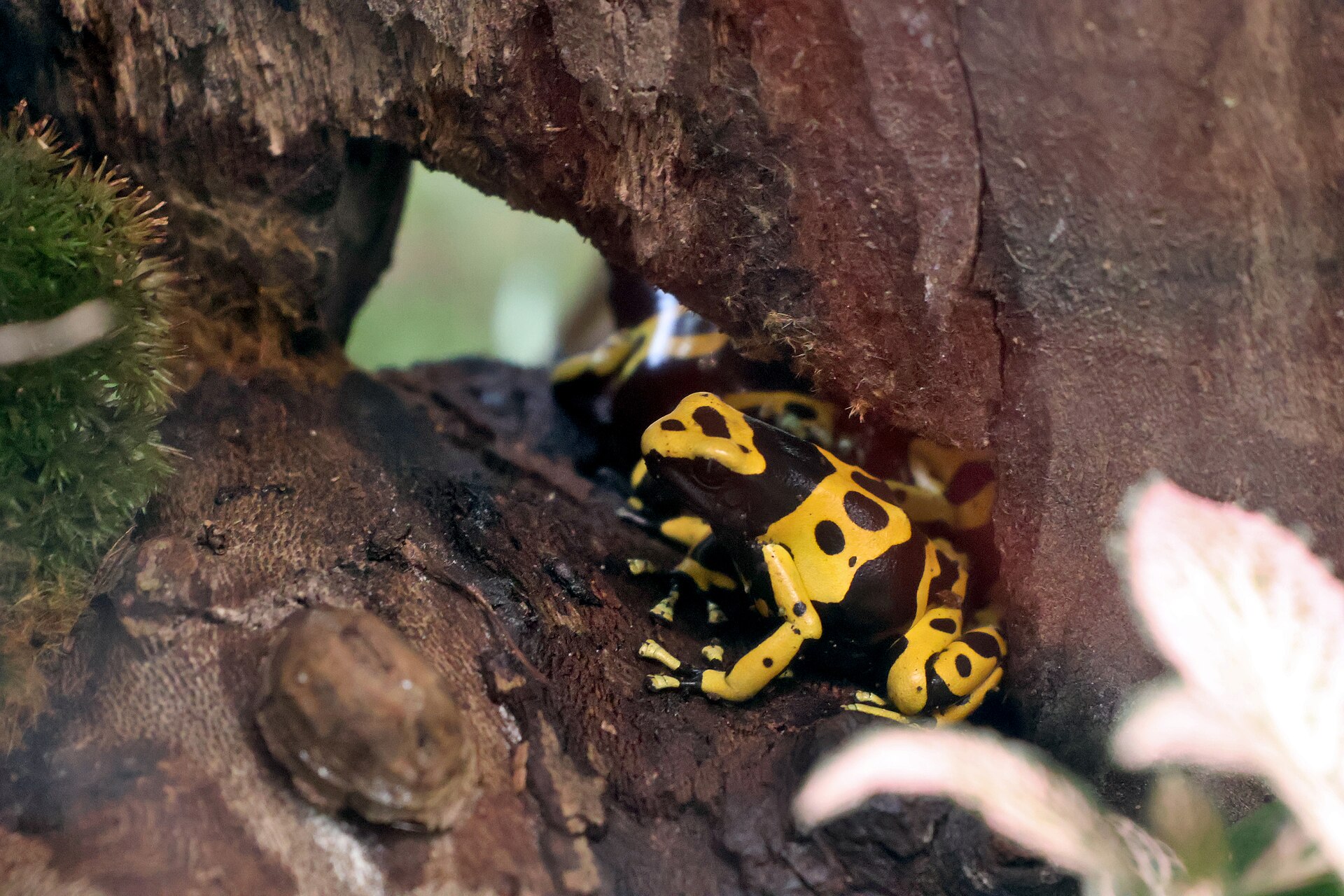 Yellow-Banded Dart Frog
 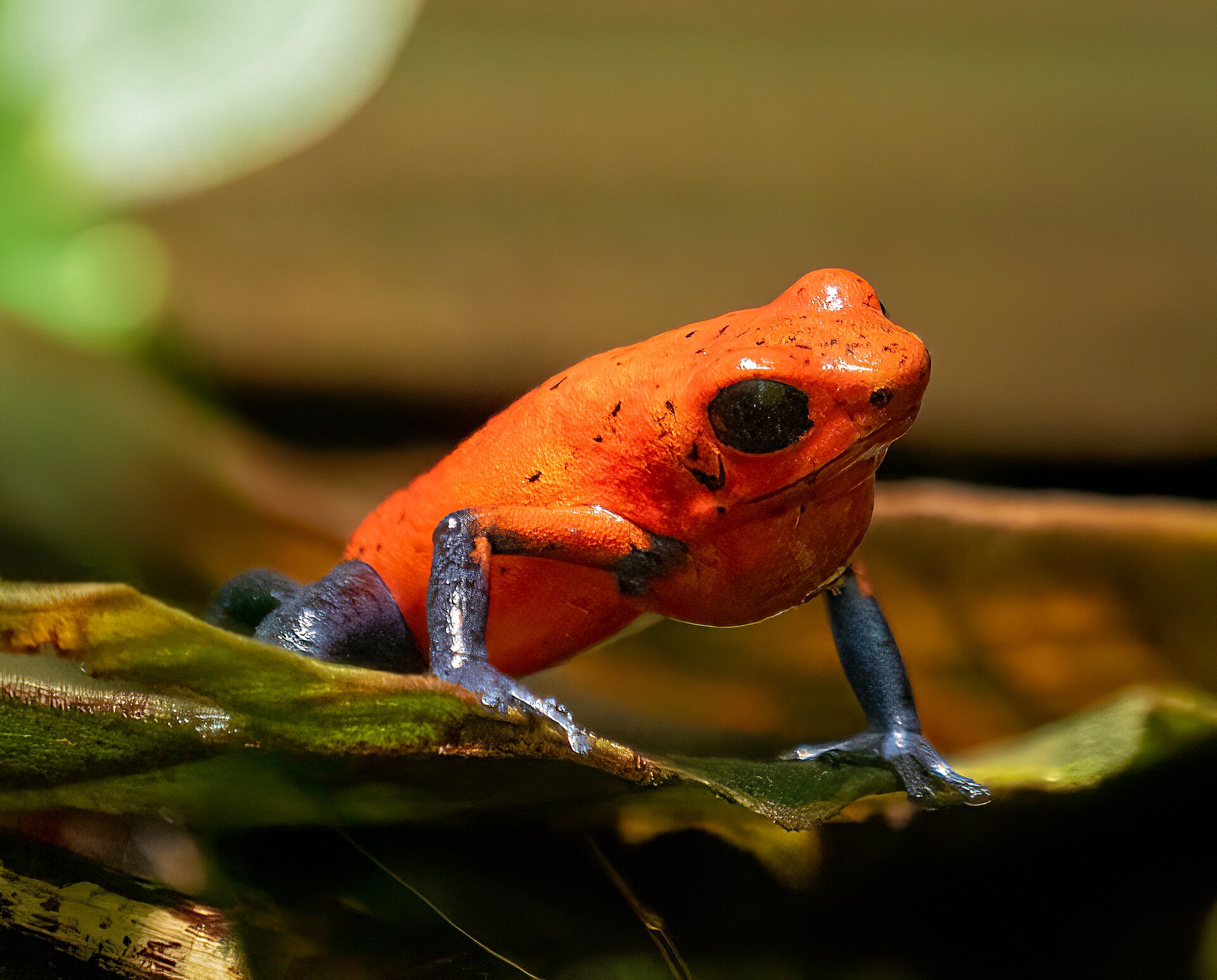 Strawberry Dart Frog
 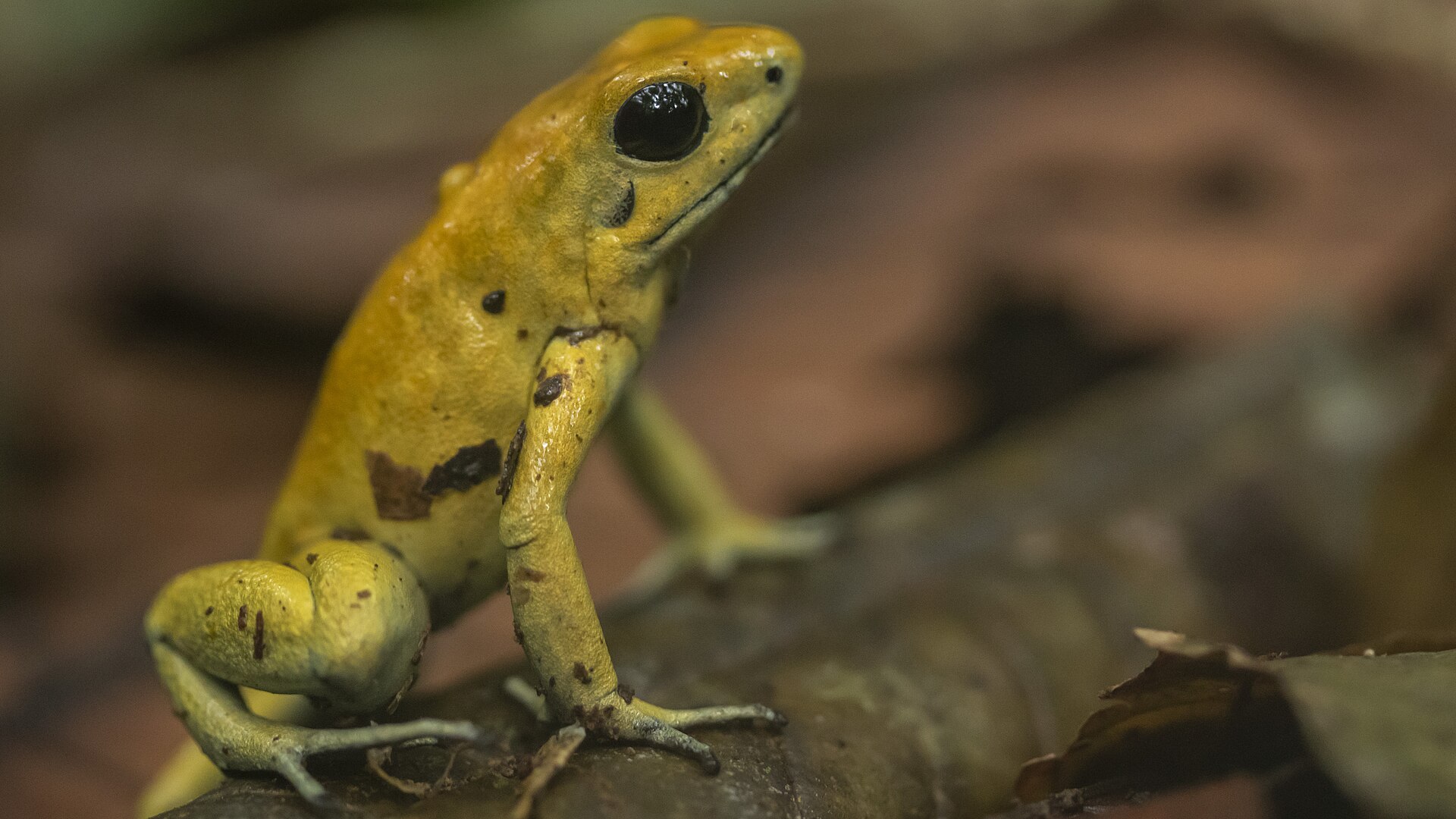 Golden Poison Frog
 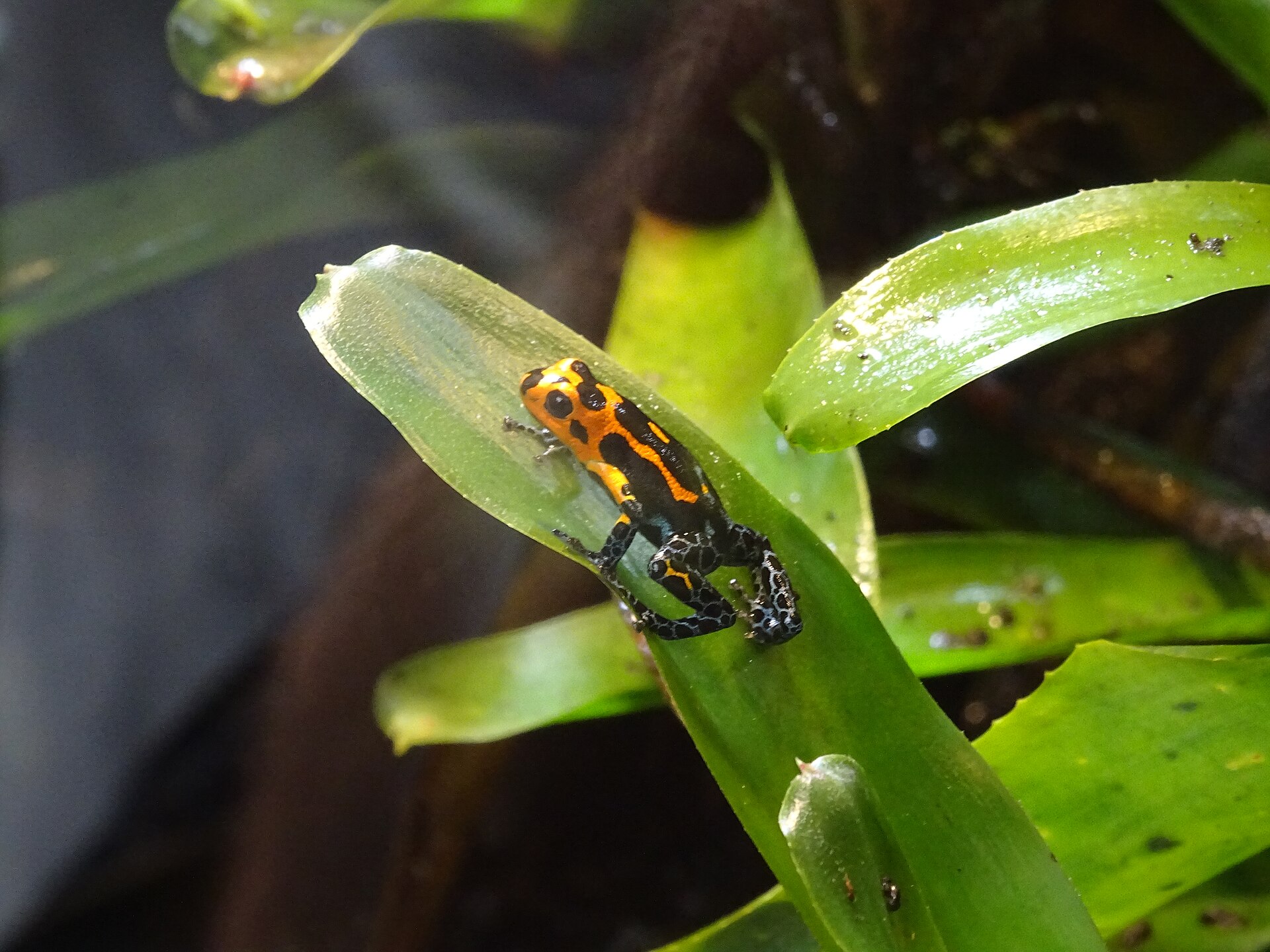 Thumbnail Dart Frog
 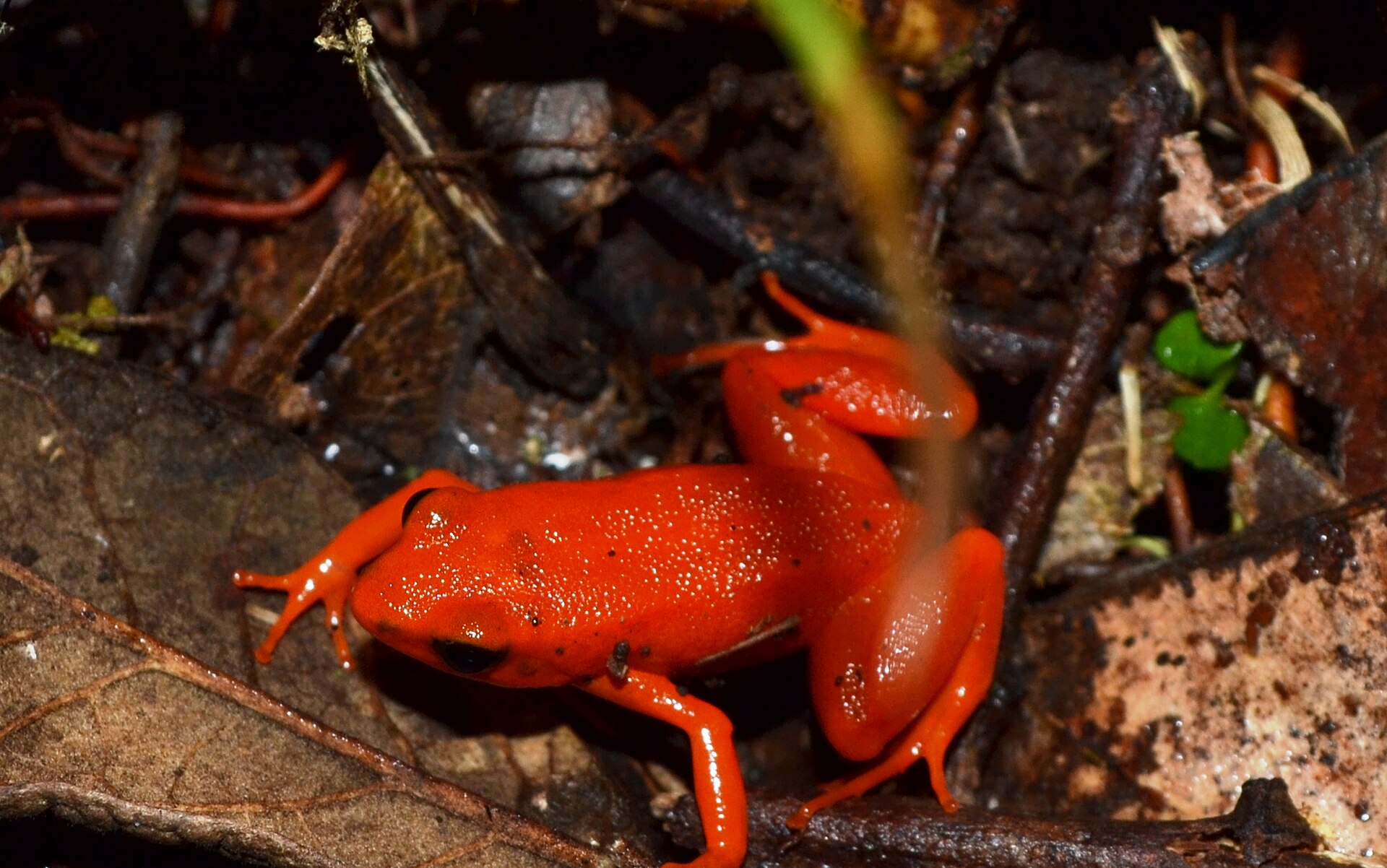 Golden Mantella
 Keeping dart frogs
Dart frogs are display animals, not handling pets. They thrive in bioactive planted vivariums — lush, live-planted glass enclosures with cork bark hides, leaf litter, and a microfauna culture of springtails and isopods to process waste. Most species are kept at comfortable room temperature (68–78°F) with no heating required in most homes — overheating is a greater risk than cold.
Diet is exclusively live micro-feeders: fruit flies (Drosophila melanogaster and D. hydei), springtails, isopods, small crickets, bean beetles, and similar tiny invertebrates. All feeders must be gut-loaded and dusted with calcium + D3 at every feeding. UVB is low and optional if supplementation is consistent, but a low-output bulb (Ferguson Zone 1) benefits long-term bone health.
Difficulty ranges from beginner (Green-and-Black, Yellow-Banded) to intermediate (Strawberry, Golden Poison, Golden Mantella) to advanced (Thumbnail frogs). See each species page for the full care guide.
Where to buy & shop for Dart Frog
Affiliate links — we may earn a small commission at no cost to you.
Are dart frogs poisonous to touch?
Wild dart frogs secrete skin alkaloids that can be absorbed through cuts or mucous membranes. However, captive-bred dart frogs raised on commercial feeders (fruit flies, crickets) are completely non-toxic — they have no access to the wild dietary mites and ants that produce the alkaloids. Most keepers treat captive-bred dart frogs as safe to handle briefly, though handling is still minimised because their permeable skin absorbs oils and residues from human hands.
Are captive-bred dart frogs poisonous?
No. Captive-bred dart frogs are entirely non-toxic. The alkaloids in wild dart frogs are dietary in origin — sequestered from specialised ants, mites, and millipedes in their natural habitat. Dart frogs raised in captivity on standard feeder insects never develop any toxicity.
Can you keep poison dart frogs as pets?
Yes — captive-bred dart frogs are popular, safe, and legal to keep in most places. They thrive in bioactive planted vivariums at room temperature and are among the most rewarding display amphibians available. Difficulty ranges from beginner (Green-and-Black, Yellow-Banded) to intermediate (Strawberry, Golden Poison) to advanced (Thumbnail frogs). Source only captive-bred specimens from reputable breeders.
What's the most poisonous frog?
The golden poison frog (Phyllobates terribilis) from Colombia is considered the most toxic vertebrate on Earth. A single wild individual carries enough batrachotoxin to kill several adult humans. However, captive-bred P. terribilis are completely non-toxic — the toxin is dietary in origin and not produced by captive animals.
How long do dart frogs live?
Most commonly kept dart frog species live 10–15 years in captivity with proper care. Some Dendrobates and Oophaga species have been documented living over 20 years. Thumbnail frogs (Ranitomeya) typically live 8–12 years captive. Providing correct temperature, humidity, live micro-feeders, and a bioactive vivarium are the keys to longevity.