Bioactive Vivarium Setup
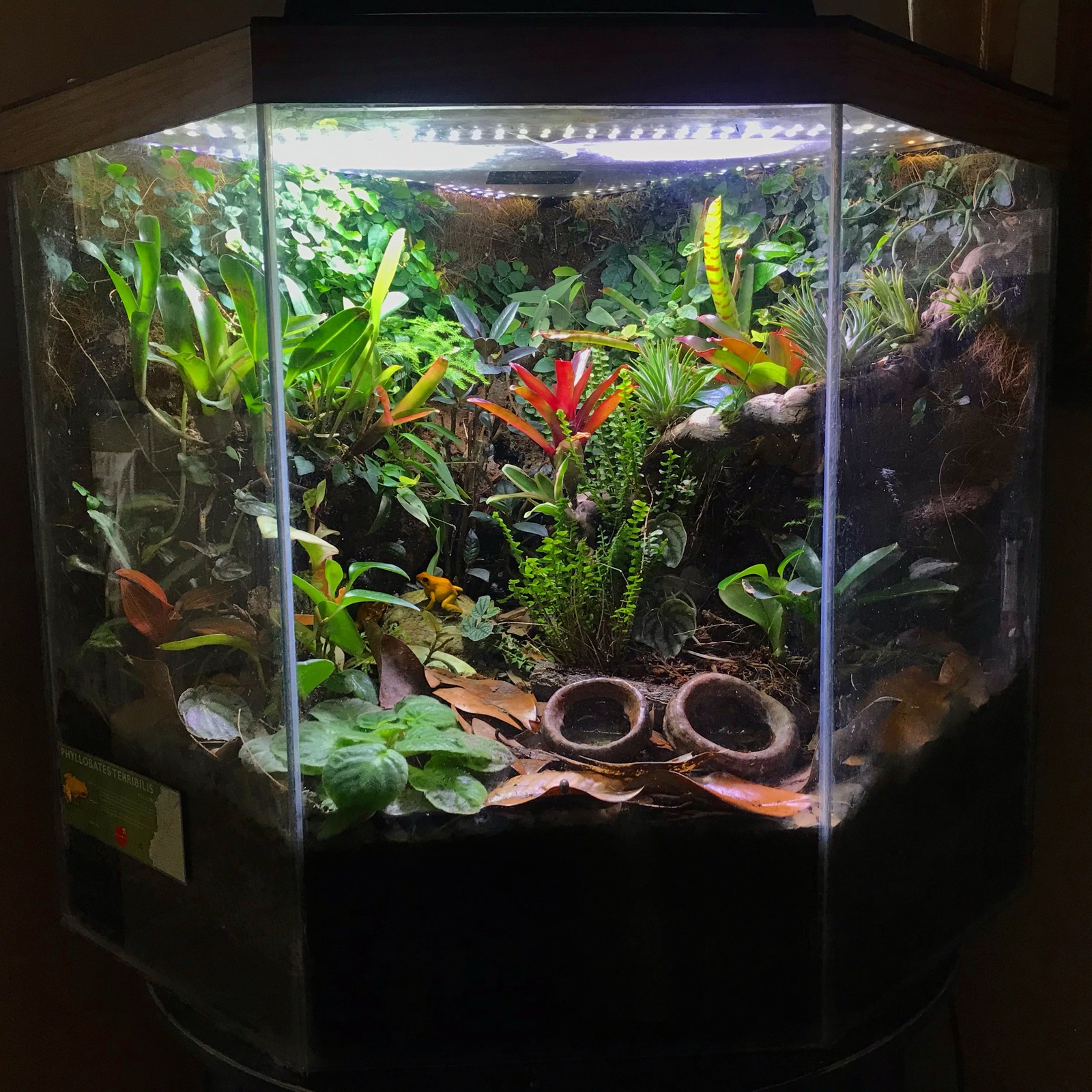
A bioactive vivarium isn't just a pretty enclosure — it's a living, self-cleaning ecosystem. Live plants, naturalistic substrate, and a thriving cleanup crew of springtails and isopods work together to break down waste, stabilize humidity, and create an environment that supports healthier, less-stressed animals. Use the builder below to calculate everything your build needs.
Bioactive Vivarium Builder
Enter your enclosure dimensions and choose a biome — we'll calculate substrate volumes, cleanup-crew quantities, and a full gear checklist with buy links.
The layers of a bioactive vivarium
A successful bioactive enclosure is built bottom-up in distinct functional layers. Skip or rush any layer and the whole system suffers.
Layer 1 — Drainage layer (tropical & temperate only)
A 1.5–2 in layer of LECA (lightweight expanded clay aggregate) or hydroton sits at the very bottom. It holds excess water below the substrate root zone, preventing waterlogging, root rot, and the hydrogen-sulfide smell of anaerobic substrate. Arid builds skip this layer — the substrate is kept dry.
An optional false-bottom screen or drainage mesh separating the LECA from the substrate above makes plant maintenance easier and keeps substrate from settling into the drainage zone over time.
Layer 2 — Substrate
Match the substrate to your species' native habitat:
- Tropical — ABG mix (tree fern fiber, sphagnum, orchid bark, charcoal, peat) or a commercial coco-fiber blend; 3 in deep.
- Temperate — topsoil + coco coir + leaf litter compost; 2.5 in deep.
- Arid — 60–70% coarse sand + 30–40% topsoil or coco coir; 5 in deep to support burrowing behavior.
Layer 3 — Leaf litter (tropical & temperate)
A 1–2 in surface layer of dried magnolia or oak leaves serves multiple functions: it shelters the springtail colony, retains surface humidity, provides hiding enrichment for ground-dwelling animals, and slowly decomposes to feed the substrate micro-organisms. Replenish every few weeks as it breaks down.
Layer 4 — Cleanup crew
Springtails (Folsomia candida or tropical species) are the workhorse of the bioactive — they consume mold, fungal spores, and micro-waste at the surface. Isopods tackle larger organic material including shed skin and feces. Together they keep ammonia levels near zero and mold in check.
Seed the cleanup crew and let it establish for 4–8 weeks before adding any animals. A colony that hasn't had time to multiply will be overwhelmed by animal waste and crash.
Layer 5 — Live plants
Plants transpire moisture (helping maintain humidity in tropical builds), anchor the substrate, provide behavioural enrichment, and contribute to oxygen exchange. Choose species rated safe for your animal. Good starting picks:
- Tropical — pothos (Epipremnum aureum), bromeliads, ferns, peperomia, philodendron.
- Temperate — mosses, sedges, clover, native ferns, strawberry plants.
- Arid — aloe, haworthia, gasteria, torch cactus (pot-in-substrate to control rot risk).
Benefits of going bioactive
- Self-cleaning — the cleanup crew processes waste continuously; spot-cleaning becomes rare.
- Stable micro-climate — substrate moisture buffers humidity swings better than paper towels ever can.
- Naturalistic enrichment — animals exhibit more natural behaviour (burrowing, foraging, hiding in leaf litter).
- Reduced stress — complex environments reduce stereotypic pacing and stress markers in many species.
- Lower ammonia — microbial nitrification keeps air quality higher than conventional substrate changes.
Live cleanup crew & feeder insects
Source your cleanup crew and feeder insects from specialist suppliers for healthy, established colonies.
Species that thrive in bioactive setups
These species have well-documented bioactive husbandry. Follow each species page for humidity, UVB, and temperature targets.
Where to buy & shop for bioactive vivarium supplies
Affiliate links — we may earn a small commission at no cost to you.
Frequently asked questions
What is a bioactive vivarium?
A bioactive vivarium is an enclosure that functions as a living micro-ecosystem. It contains live plants, a naturalistic substrate, and a cleanup crew of small invertebrates (springtails and isopods) that break down waste, preventing ammonia build-up and dramatically reducing spot-cleaning. The result is a self-regulating environment that looks natural, smells clean, and supports healthier animals.
Do I need a drainage layer in a bioactive vivarium?
For tropical and temperate builds — yes. A 2-inch layer of LECA (lightweight expanded clay aggregate) or hydroton at the base holds excess water below the substrate, preventing root rot and anaerobic conditions. Arid builds do not need a drainage layer because the substrate is kept dry; a small moist-hide section can have its own contained drainage.
What cleanup crew do I need for a bioactive vivarium?
Springtails are essential in all biomes — they eat mold and micro-waste at the substrate surface. Tropical and temperate builds also benefit from tropical or temperate isopods (Porcellio scaber, Armadillidium species) to process larger debris and shed skin. Arid builds can use dwarf white isopods (Trichorhina tomentosa) confined to a moist hide corner. Use our Vivarium Builder above to calculate culture quantities for your enclosure volume.
How long before I can add animals to a bioactive vivarium?
Allow 4–8 weeks after seeding the cleanup crew before introducing animals. This gives the springtails and isopods time to establish thriving colonies and for live plants to take root. Adding animals too early disrupts colonization and the vivarium may never cycle properly.
Is a bioactive vivarium good for beginners?
Bioactive setups are more complex to set up correctly than bare enclosures, but once established they are often easier to maintain day-to-day — less spot-cleaning, more stable micro-climate, and visually rewarding. We recommend beginners start with a forgiving species (e.g. crested gecko, dart frogs) in a tropical bioactive, use the Builder tool for quantities, and read up on the specific cleanup-crew species before purchasing.