Fruit Flies: Culture Flightless Drosophila
The live feeder that dart frogs, juvenile geckos, and small amphibians rely on — and the art of keeping thousands of them from escaping your reptile room.
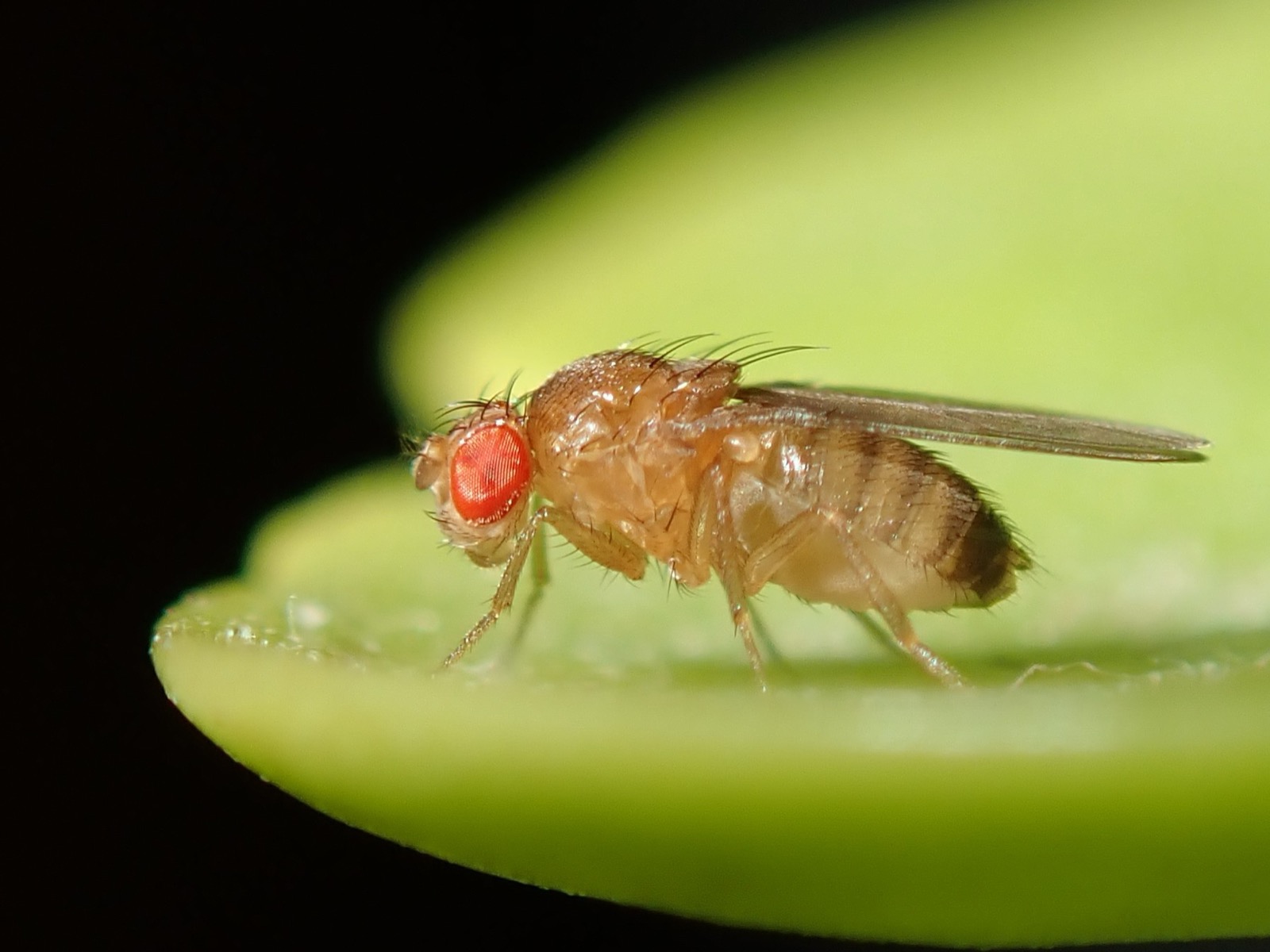
Fruit Flies at a Glance
- Species
- D. melanogaster (small), D. hydei (large)
- Mutation
- Flightless (vestigial wing) — does not fly
- Culture media
- Instant potato + yeast + sugar + methylparaben
- Culture peak
- 14–21 days (melanogaster), 4–5 weeks (hydei)
- Ideal temp
- 72–76°F (22–24°C)
- Feeder for
- Dart frogs, small geckos, juvenile amphibians
What are flightless fruit flies?
Drosophila melanogaster and D. hydei are small flies in the family Drosophilidae that have been adapted for herpetoculture use by selecting for a vestigial-wing mutation that prevents sustained flight. The resulting "flightless" cultures are safe to use indoors — flies that escape simply fall rather than disperse through the house. They are the primary live feeder for almost all dart frog species and essential supplemental feeders for crested geckos, day geckos, and other small insectivores.
Nutritionally, fruit flies are high in protein and moderate in fat. They are deficient in calcium, which is why calcium + D3 dusting at every feeding is non-negotiable for dart frogs and other insectivores with high calcium demands.
D. melanogaster vs. D. hydei — which to use
Both species are maintained by most serious dart frog keepers simultaneously:
- D. melanogaster (2–3 mm): thumbnail dart frogs (Ranitomeya, Allobates), dart frog froglets (first feeder post-metamorphosis), and very small amphibians. Fast culture (peak at 2–3 weeks at 72°F). High yield.
- D. hydei (3–4 mm): adult dart frogs, crested gecko and day gecko juveniles, small mantellas, juvenile tree frogs. Slower culture (4–5 weeks to peak) but larger body size supplies more nutrition per fly.
For dart frogs specifically, ReptiFiles and Dendroboard recommend offering both species simultaneously for dietary variety — different fly sizes and nutritional profiles provide enrichment and reduce the risk of nutrient imbalance from a single-feeder diet.
How to culture fruit flies (step by step)
Equipment
- 32 oz plastic culture cups with mesh-topped lids (pre-made culture cups from suppliers, or wide-mouth Mason jars with fabric lids)
- Excelsior (fine wood wool) or coffee filters — the climbing medium that gives flies a surface to crawl on and lays eggs in
- Fruit fly media (commercial pre-made, or DIY — see recipe below)
- Starter culture from a supplier (arrives with eggs, larvae, and adult flies)
Basic setup
- Prepare media: If using commercial media, follow package instructions — typically add water to the dry mix in the bottom of the cup, stir to a thick oatmeal consistency, and allow to cool completely before adding flies.
- DIY media recipe (Josh's Frogs and Dendroboard community standard): 2 parts instant mashed potato flakes + 1 part brewer's yeast + 1 part sugar + a pinch of methylparaben (mold inhibitor). Add water to a paste. Optional: 1 tsp apple cider vinegar per cup for pH balance and mold reduction.
- Add excelsior: Place a wad of fine wood wool or a loosely crumpled coffee filter on top of the media. This climbing substrate is where flies congregate, lay eggs, and where emerging flies rest. It is essential — without it, yield drops dramatically.
- Seed the culture: Pour your starter culture into the new cup over the excelsior. Close the lid securely. Label with the date started and species.
- Temperature: Keep at 72–76°F. D. melanogaster peaks in 14–21 days; D. hydei in 28–35 days. Temperatures below 68°F slow development significantly; above 82°F crash cultures rapidly.
- Harvesting: Tap the cup sharply on a hard surface to knock flies down. Open the lid over the vivarium or a feeding container. Alternatively use a funnel or feeder cup. Dump a fresh pinch of calcium supplement in, swirl, then pour into the enclosure.
Staggered production schedule
A single culture does not produce consistently — it peaks and drops off over 4–8 weeks. Maintain a steady supply by starting new cultures every 10–14 days (melanogaster) or every 2–3 weeks (hydei). Keep 4–6 cultures active at any time in different stages. Most serious dart frog keepers run 6–12 cultures simultaneously for a collection of 6–12 frogs.
Preventing and managing mites
Grain mites (Tyrophagus putrescentiae) are the most common and destructive culture pest. They consume media, kill larvae, and spread to other cultures.
- Store cultures at 72–76°F — mites prefer cooler, damper conditions.
- Apply a ring of petroleum jelly or Tangle-Trap around the outside top of the cup to prevent mites from walking out and spreading.
- Never place cultures directly on shelves — use a water moat (cups in a shallow tray of water) in heavily infested rooms.
- If mites appear: place the infested cup on a warm surface (80°F). Flies climb up to excelsior; mites concentrate in the media. Transfer excelsior + flies to a fresh clean cup with new media. Discard the original cup.
- Maintain cultural cleanliness — discard old cultures promptly, wipe lids and cups after use.
What eats fruit flies
Flightless fruit flies are the most versatile micro-feeder in the herp hobby. They are consumed by:
- All dart frog species — D. melanogaster for thumbnails and juveniles; D. hydei for adults and larger species like Dendrobates tinctorius and Oophaga pumilio.
- Crested gecko juveniles — under about 10 grams, fruit flies are an important live feeder supplement to commercial crested gecko diet (CGD).
- Day geckos (Phelsuma sp.) — all sizes benefit from D. hydei as a daily feeder.
- Small tree frogs and juvenile anurans — including small mantellas, juvenile whites tree frogs, and most newly metamorphed frogs.
- Small chameleons — veiled and panther chameleon juveniles are often started on D. hydei before graduating to small crickets.
- Tarantulas and jumping spiders — fruit flies are widely used outside the reptile hobby too.
See also: springtails and isopods for the cleanup crew side of bioactive setups, and the bioactive vivarium guide for how feeders and cleanup crew work together.
Where to buy flightless fruit fly cultures
Pre-made flightless cultures (ready to pour) and starter cultures (eggs and larvae only, to add to your own media) are both widely available. Josh's Frogs is the most beginner-friendly source with detailed care guides; NEHERP, Black Jungle, and Reptile Supply Company are also well-regarded. Pre-made cultures from Amazon are convenient but quality varies — check seller reviews carefully.
Shop flightless fruit fly cultures
Some links are affiliate links — we may earn a small commission at no cost to you.
What is the difference between D. melanogaster and D. hydei fruit flies?
Drosophila melanogaster are smaller (about 2–3 mm) and faster to produce (culture peaks in 14–21 days at 72°F). They are the staple feeder for thumbnail dart frogs and small dart frog juveniles. D. hydei are roughly twice the size (3–4 mm) and take longer to culture (4–5 weeks to peak), but their larger size makes them suitable for adult dart frogs, crested gecko juveniles, day geckos, and other small insectivores. Most keepers maintain both species simultaneously.
How long does a fruit fly culture last?
A well-made culture typically peaks and produces for 4–6 weeks for D. melanogaster and 6–8 weeks for D. hydei. Production drops off as the media is consumed. For a steady supply, start fresh cultures every 2–3 weeks in a staggered rotation so you always have maturing cultures ready.
How do I prevent mites in fruit fly cultures?
Mites (Tyrophagus and grain mite species) are the number-one fruit fly culture problem. Prevention: store cultures at room temperature (68–74°F) — lower temperatures slow mites but also flies; isolate new cultures from your vivarium room; use a mite barrier (petroleum jelly, Tangle-Trap, or a water moat) on culture lids; and discard heavily infested cultures immediately rather than salvaging. If mites appear, move remaining flies to a fresh culture using the temperature gradient method (mites sink, flies climb).
Do I need to dust fruit flies with supplements?
Yes — fruit flies have poor calcium-to-phosphorus ratios. Dust with a calcium + D3 powder at every feeding for dart frogs and most amphibians. Pour flies into a small container, add a pinch of supplement, cover and gently swirl to coat. For gut-loading, commercial fruit fly media already contains some nutrients, but dusting is still required.
Can I make my own fruit fly media?
Yes. Basic DIY media: combine instant mashed potato flakes (binder), brewer's yeast (protein and nutrition), sugar (energy), and methylparaben (mold inhibitor). Mix dry, add water to a thick paste, and pour into your culture cup. Many keepers add cider vinegar for pH balance. Pre-made media mixes from Josh's Frogs and other suppliers are reliable and convenient if you prefer not to DIY.