Springtails: Culture, Care & Uses
The invisible workforce of every great bioactive vivarium — and a live feeder that dart frogs and small geckos go wild for.
Springtails at a Glance
- Common species
- Folsomia candida, Sinella curviseta
- Culture substrate
- Activated charcoal or damp coco-fiber
- Food in culture
- Brewer's yeast, rice, dried mushroom
- Ideal temp
- 68–76°F (20–24°C)
- Role in vivarium
- Mold control, cleanup crew, live feeder
- Feeder for
- Dart frogs, small geckos, juvenile amphibians
What are springtails?
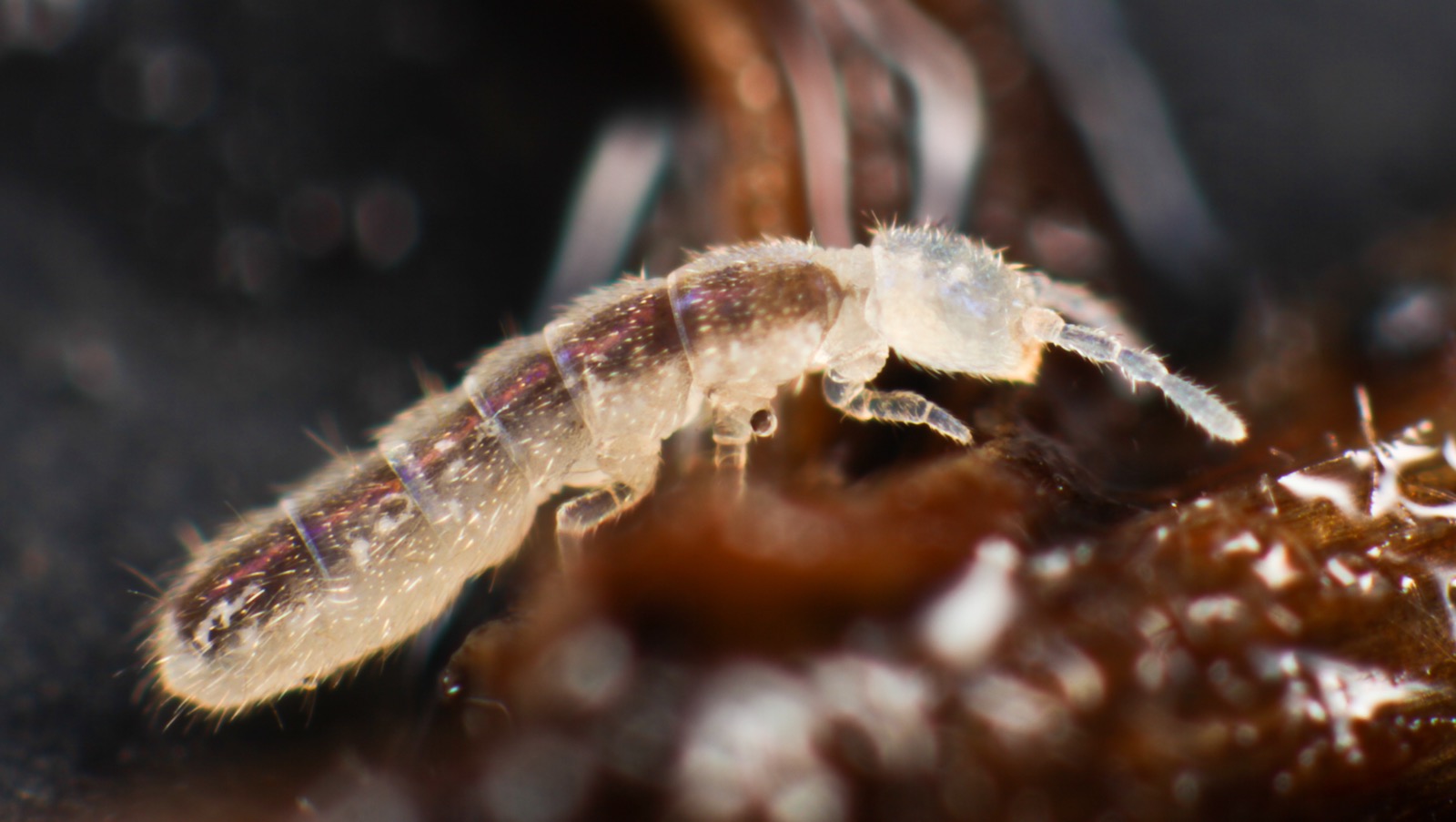
Springtails (class Collembola) are tiny hexapods — not true insects — that measure 0.5–2 mm in length. Their defining feature is the furcula, a forked tail-like appendage folded beneath the abdomen that releases like a spring, launching the animal away from danger. Most keeper-maintained species are Folsomia candida (tropical white springtail), a pale, blind, parthenogenetic species that thrives in damp, dark conditions and reproduces quickly at room temperature.
In nature, springtails live in leaf litter, soil, and decaying wood — the same microhabitats recreated in a bioactive vivarium. They are universally regarded as the single most important microorganism in bioactive keeper setups.
Why keepers culture springtails
Springtails serve two roles in the herpetoculture hobby:
- Bioactive cleanup crew: In high-humidity vivariums (dart frog tanks, crested gecko rainforest setups, aroid terrariums), surface mold appears rapidly unless springtails are present to consume fungal hyphae before they spread. A healthy springtail colony also processes frog waste, shed skin fragments, and uneaten feeder insects, dramatically reducing deep substrate cleaning frequency.
- Live feeder insects: Springtails are the primary live feeder for poison dart frogs, thumbnail dart frog species, small mantellas, juvenile dart frogs fresh out of the water, and tiny amphibians such as miniature tree frogs. They are also supplemental feeders for crested gecko and day gecko juveniles.
How to culture springtails (step by step)
Charcoal culture (recommended for beginners)
The classic charcoal culture is the most reliable starting method, popularized by Josh's Frogs and the wider Dendroboard community. Here's the full process:
- Container: Use a 16 oz or 32 oz deli cup with a lid punched with ventilation holes (cover with fine mesh to prevent escapes). Or use a 4–8 oz culture cup.
- Substrate: Fill 1–1.5 inches deep with horticultural activated charcoal (not aquarium carbon — the larger granule size works best). Rinse before use.
- Moisture: Add dechlorinated water until the charcoal is damp but not flooded. The surface should glisten; free-standing water should be minimal. Mist every 5–7 days to maintain moisture — springtails desiccate quickly.
- Seed the culture: Pour in your starter springtails (order a "culture" from a supplier — it arrives as a cup with hundreds to thousands of individuals).
- Feed: Place a small pinch of brewer's yeast (the dried flake kind sold for baking) on the charcoal surface every 3–5 days. Springtails consume the yeast and the resulting microbial film. Alternatively use a few grains of dry instant rice or a small piece of dried shiitake mushroom. Do not overfeed — decaying uneaten food causes mite infestations.
- Temperature: Keep at 68–76°F. Warmer speeds reproduction; cooler slows it. Avoid temperatures above 80°F, which crash cultures.
- Harvest: Flood the container with dechlorinated water — springtails float and can be poured directly into the vivarium or a feeder dish. Or simply pour charcoal and all into the vivarium.
Soil / coco-fiber culture (larger sustained colonies)
For keepers needing high ongoing volume, a coco-fiber or topsoil culture sustains larger populations. Use a half-gallon container, fill 2 inches deep with moistened coco-fiber or NEHERP's recommended ABG-style mix, seed with springtails, and feed with yeast or dried mushroom. These cultures are slower to crash and self-sustain longer between feedings, but harvesting is messier than charcoal cultures.
Preventing mite infestations
The biggest culture killer is a mite outbreak (grain mites, Tyrophagus sp.), which outcompetes springtails. Prevention:
- Never overfeed — remove uneaten food after 48 hours.
- Keep cultures cool (under 76°F).
- If mites appear, start a fresh culture from springtails harvested by floating.
- Maintain at least two backup cultures at all times.
What eats springtails
Springtails are consumed by virtually every small insectivorous herp but are most critical as feeders for:
- Poison dart frogs — springtails are the staple diet of thumbnail dart frogs (Ranitomeya, Allobates) and a key supplement for larger dendrobatids alongside fruit flies.
- Juvenile dart frogs freshly metamorphed — springtails are often the only feeder small enough for froglets.
- Crested gecko and day gecko juveniles — benefit from springtails as a protein supplement.
- Small mantellas and miniature tree frogs — rely on springtails and fruit flies as primary feeders.
Inside a bioactive vivarium, springtails also act as passive cleanup crew — even in enclosures where they are not actively consumed as food.
Where to buy springtails
Purchase from specialty herp suppliers rather than general pet stores. Live cultures ship well via 2-day mail when temperatures allow. Reputable sources include Josh's Frogs (most beginner-friendly), NEHERP, Black Jungle Terrarium Supply, and Tropical Springtails.
Shop springtail cultures
Some links are affiliate links — we may earn a small commission at no cost to you.
What do springtails eat in a vivarium?
Springtails are detritivores — they feed on mold, fungal hyphae, algae, decaying organic matter, and the surface biofilm that builds up in humid enclosures. They are essential for mold control in bioactive vivariums; without them, surface mold outbreaks are nearly inevitable in high-humidity setups.
How long does it take to establish a springtail culture?
A new springtail culture on activated charcoal typically shows visible population growth within 2–3 weeks at room temperature (70–75°F). A healthy culture reaches harvestable density in 4–6 weeks. Cultures on soil or coco-fiber substrate establish slightly slower but can sustain larger populations long-term.
Can springtails live in a dart frog vivarium permanently?
Yes — springtails establish self-sustaining colonies inside a well-built bioactive vivarium. Dart frogs eat springtails as a primary food source but cannot outpace a thriving colony. Regularly topping up the vivarium with extra springtails from a backup culture prevents population crashes.
What species of springtails are used in the hobby?
The most common hobby springtail is Folsomia candida (tropical white springtail), which thrives on charcoal cultures and reproduces rapidly. Sinella curviseta (rice flour springtail) is another popular species. Both are sold by Josh's Frogs, NEHERP, and other specialty suppliers.
Can springtails harm reptiles or amphibians?
No. Springtails are completely harmless to all reptiles and amphibians. They do not bite, sting, parasitize, or transmit disease. They are beneficial — they eat harmful mold and break down waste, making the enclosure cleaner and reducing pathogen load.