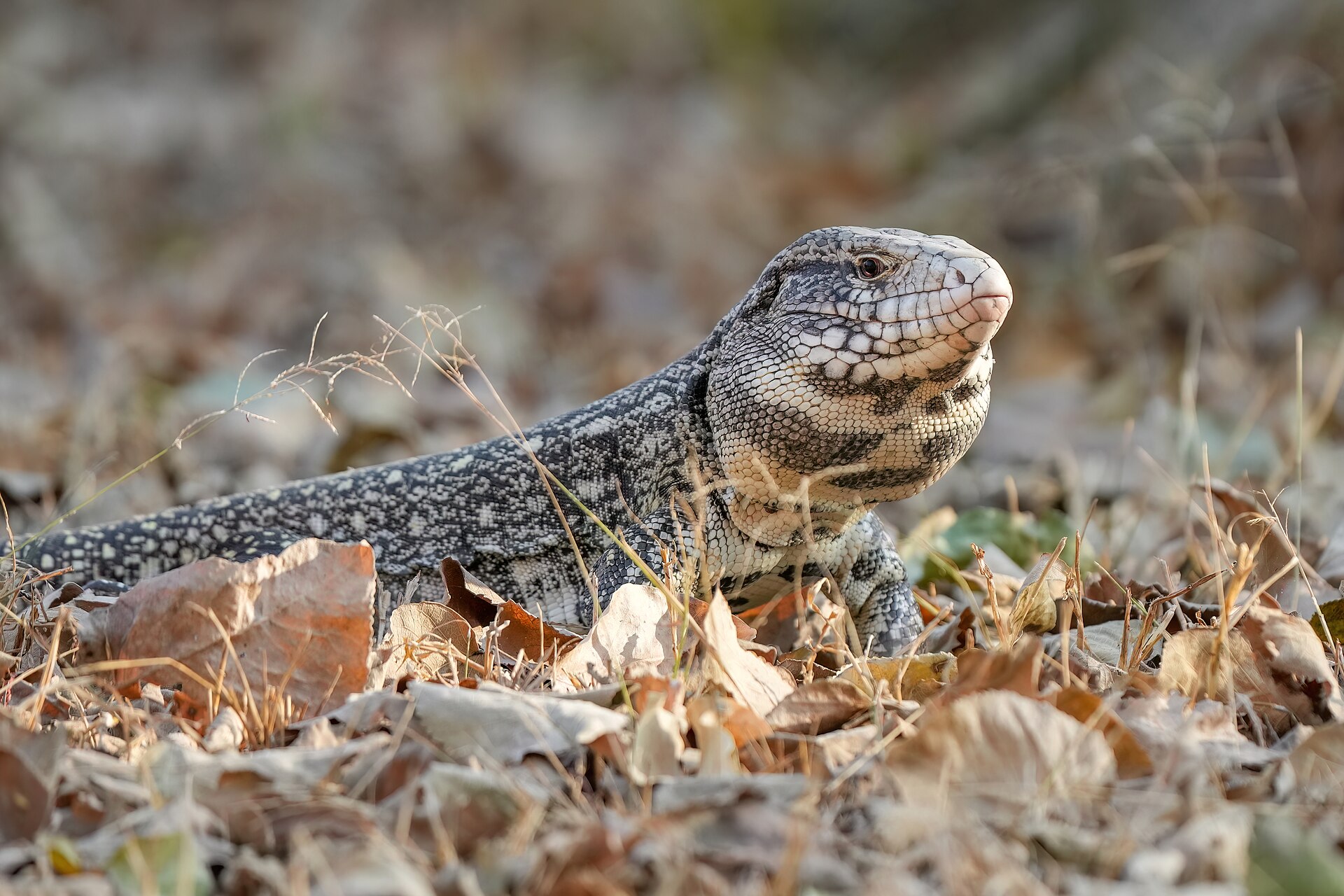
Tegu Care
Salvator merianae
A highly intelligent, dog-like monitor-class lizard requiring a very large custom enclosure, extremely high basking temps, and years of socialization — rewarding for experienced keepers but a serious long-term commitment.
UVB Setup Calculator
Enter your enclosure dimensions — we'll recommend the right UVB bulb and mounting height for Tegu.
Tegu care specs
- Care level
- advanced
- Adult size
- 3–5 ft
- Lifespan (yrs)
- 15–20
- Basking (°F)
- 125–135
- Cool side (°F)
- 75–85
- UVB need
- high
- Target UVI (Ferguson)
- 3.0–4.0
- Humidity (%)
- 70–80
- Diet type
- omnivore
- Diet
- omnivore
- Min enclosure (adult)
- 8×4×4 ft
- Housing
- Generally solitary
- Price (USD)
- 100–200
- Origin
- South America
Where to buy & shop for Tegu
Affiliate links — we may earn a small commission at no cost to you.
What is a Tegu?
A Tegu is a advanced-keeper lizard from South America — Argentina. Adults reach 3–5 ft (males larger; females typically 3–3.5 ft) and can live 15–20 years in captivity — a long-term commitment. A highly intelligent, dog-like monitor-class lizard requiring a very large custom enclosure, extremely high basking temps, and years of socialization — rewarding for experienced keepers but a serious long-term commitment.
What size enclosure does a Tegu need?
The minimum enclosure for an adult Tegu is 8×4×4 ft (32 sq ft floor space minimum for a single adult; custom builds or converted rooms preferred). Bigger is always better — Tegus benefit from extra space to thermoregulate and express natural behaviours.
What you need:
- Secure, well-ventilated enclosure — screen top or side ventilation; tight-fitting lid.
- Thermostat-controlled basking lamp — dimmer or proportional thermostat; never a heat rock.
- Warm and cool hides — at least one hide on each end of the thermal gradient.
- Water bowl — shallow, heavy-bottomed; changed daily.
- Appropriate substrate — species-appropriate depth; moist hide in one corner.
What temperature does a Tegu need?
Provide a basking spot of 125–135°F and a cool side of 75–85°F. Measure surface temperature with an infrared thermometer. Use a high-wattage basking bulb on a dimmer or thermostat — never a heat rock. Drop to 65–75°F at night to support digestion and immune function.
| Zone | Temperature |
|---|---|
| Basking spot | 125–135°F (measure surface temperature with an infrared thermometer) |
| Cool side | 75–85°F |
| Night | 65–75°F |
Do Tegus need UVB?
Yes — Tegus need high UVB (target UVI 3.0–4.0). Use a T5 HO 12–14% tube (e.g., Arcadia Desert 12% or Zoo Med ReptiSun 10.0) mounted directly above the basking spot. Use the UVB Calculator above to confirm mounting height and basking platform height. Verify with a Solarmeter 6.5 and replace bulbs every 12 months.
What humidity does a Tegu need?
Maintain humidity at 70–80%. High-humidity species benefit from a humid hide and daily misting. Good ventilation is essential — stagnant humid air causes respiratory infections and scale rot. Maintain a moist hide in one corner to support proper shedding. A digital hygrometer is essential.
What do Tegus eat?
Tegus are omnivores — diet composition changes significantly with age. Hatchlings/juveniles: 90% protein (insects, lean ground turkey, mice, eggs), 10% vegetables and fruit. Adults: 60% protein, 30% vegetables, 10% fruit. Protein sources: whole prey (mice, chicks), eggs, lean meats, insects. Plant matter: dark leafy greens, squash, blueberries, strawberries, mango. Calcium supplementation 3× weekly; multivitamin 1× weekly. Do not feed dog/cat food as staple — too high in fat.
Can you house Tegus together?
Generally solitary — house individually. Two females may coexist in a doubled enclosure under experienced supervision; never house two males together; male-female pairs will breed. Allow new animals at least 2 weeks to settle in before handling. Support the body fully — avoid grabbing from above, which triggers a defensive response.
Are Tegus good for beginners?
Tegus are an advanced species for experienced keepers. Research thoroughly, set up the enclosure fully, and source from a reputable captive-bred breeder before acquiring. Animals cost 100–200 (hatchlings from breeders); 200–400 (juveniles/subadults); adult prices vary widely.
What is a Tegu?
A Tegu is a advanced-keeper lizard from South America — Argentina. Adults reach 3–5 ft (males larger; females typically 3–3.5 ft) and live 15–20 years in captivity.
How big do Tegus get?
3–5 ft (males larger; females typically 3–3.5 ft). Tegus reach this size over a lifespan of 15–20 years — plan your enclosure for the adult size from the start.
What size enclosure does a Tegu need?
The minimum enclosure for an adult Tegu is 8×4×4 ft (32 sq ft floor space minimum for a single adult; custom builds or converted rooms preferred). Bigger is always better — provide the adult-size enclosure from day one rather than upgrading later.
What temperature does a Tegu need?
Basking spot 125–135°F, cool side 75–85°F — measure with a digital thermometer. Night temperatures can drop to 65–75°F. Always measure with a reliable digital thermometer.
Do Tegus need UVB?
High UVB need. Tegus need high UVB. Target UVI: 3.0–4.0. Use a T5 HO 12–14% tube and verify with a Solarmeter 6.5.
What do Tegus eat?
Hatchlings/juveniles: 90% protein (insects, lean ground turkey, mice, eggs), 10% vegetables and fruit. Adults: 60% protein, 30% vegetables, 10% fruit. Protein sources: whole prey (mice, chicks), eggs, lean meats, insects. Plant matter: dark leafy greens, squash, blueberries, strawberries, mango. Calcium supplementation 3× weekly; multivitamin 1× weekly. Do not feed dog/cat food as staple — too high in fat.
Can you house Tegus together?
Generally solitary — house individually. Two females may coexist in a doubled enclosure under experienced supervision; never house two males together; male-female pairs will breed.
Are Tegus good for beginners?
Advanced — Tegus are not recommended for beginners. They require precise husbandry, are stress-sensitive, and do not forgive mistakes.
How long do Tegus live?
15–20 years in captivity with proper care. This is a significant long-term commitment — factor that in before purchasing.
Sources
- https://reptifiles.com/colombian-argentine-tegu-care/tegu-humidity-temperatures/
- https://frogtownexoticsllc.com/blogs/news/argentine-black-white-tegu-care-guide
- https://dubiaroaches.com/blogs/lizard-care/argentine-tegu-care-sheet
- https://vetverified.com/articles/argentine-black-and-white-tegu-care-guide
- https://www.reptilecentre.com/blogs/reptile-blog/which-ferguson-zone-is-my-reptile-in
- https://thetyedyediguana.com/care-sheets/argentine-black-white-tegu-salvator-merianae/