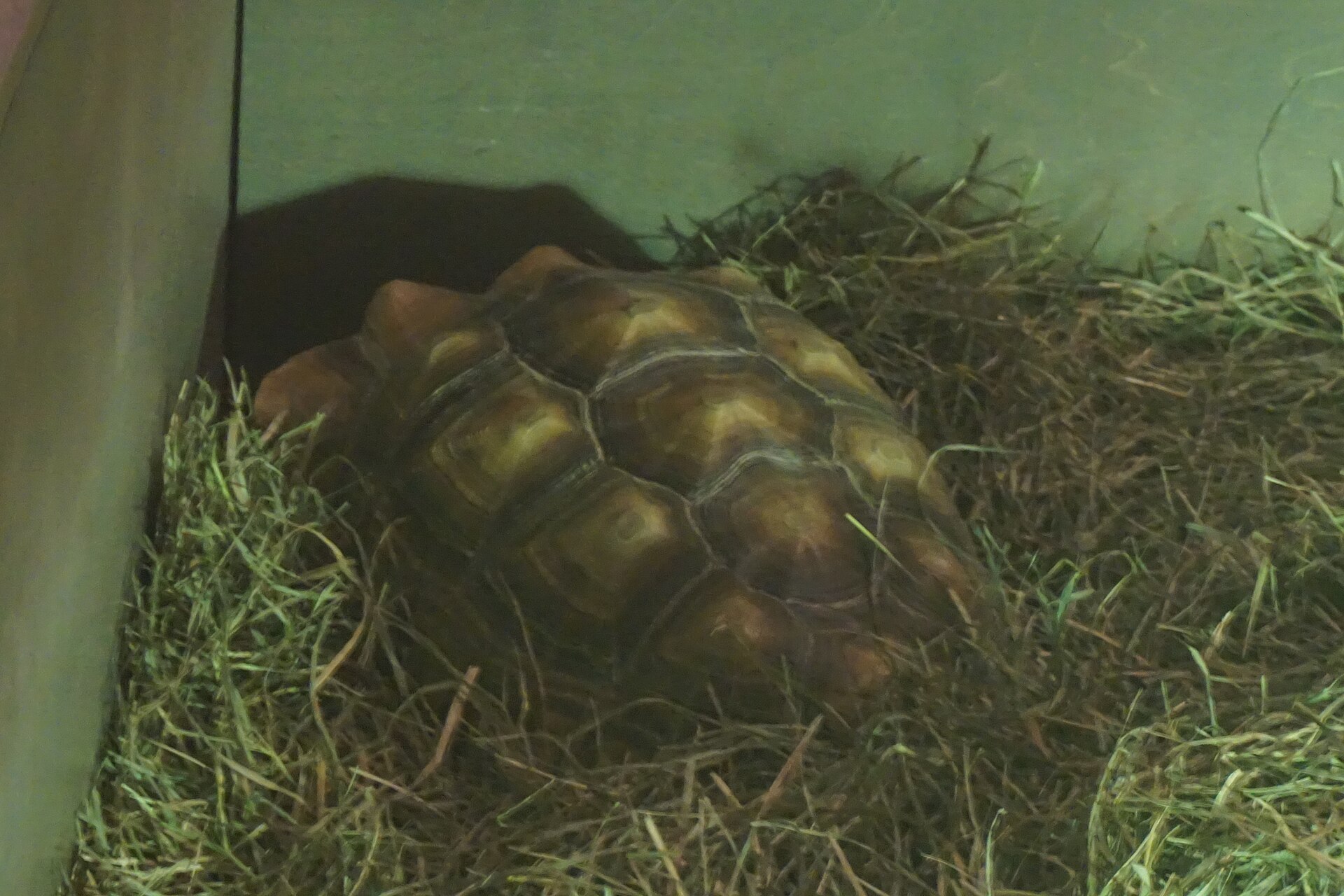
Sulcata Tortoise Care
Centrochelys sulcata
The third-largest tortoise in the world, sulcatas grow to over 100 lb and require an outdoor enclosure as adults, a strictly grass-based herbivore diet with no fruit, and strong UVB — seriously underestimated as a beginner pet.
UVB Setup Calculator
Enter your enclosure dimensions — we'll recommend the right UVB bulb and mounting height for Sulcata Tortoise.
Sulcata Tortoise care specs
- Care level
- advanced
- Adult size
- 24–30 in shell length
- Lifespan (yrs)
- 55–100+
- Basking (°F)
- 100–105
- Cool side / water (°F)
- 75–85
- UVB need
- high
- Target UVI (Ferguson)
- 3.0–6.0
- Humidity (%)
- 30–50 adults
- Diet type
- herbivore
- Diet
- herbivore
- Min enclosure (adult)
- Outdoor enclosure required for adults
- Housing
- Caution
- Price (USD)
- 50–300
- Origin
- Sahel belt of sub-Saharan Africa
Where to buy & shop for Sulcata Tortoise
Affiliate links — we may earn a small commission at no cost to you.
What is a Sulcata Tortoise?
A Sulcata Tortoise is a advanced-keeper tortoise from Sahel belt of sub-Saharan Africa. Adults reach 24–30 in shell length; 80–150 lb (males larger; exceptional specimens exceed 200 lb) and can live 55–100+ years in captivity — a long-term commitment. The third-largest tortoise in the world, sulcatas grow to over 100 lb and require an outdoor enclosure as adults, a strictly grass-based herbivore diet with no fruit, and strong UVB — seriously underestimated as a beginner pet.
What size enclosure does a Sulcata Tortoise need?
The minimum enclosure for an adult Sulcata Tortoise is Outdoor enclosure required for adults — minimum 100 sq ft per tortoise; 200+ sq ft strongly preferred by experienced keepers. Must have warm shelter/hide, secure burrowing-proof perimeter (walls 12+ in above ground and 12 in below), and year-round access to warmth in cool climates. Indoor housing only appropriate for hatchlings/juveniles under ~6 in shell.. Floor space is the priority for terrestrial tortoises. Adults typically need outdoor housing to meet roaming, thermoregulation, and grazing needs.
What you need:
- Outdoor enclosure (100+ sq ft) — adults need outdoor space; secure burrowing-proof walls.
- Warm shelter/hide — insulated box or heated indoor space for cool nights.
- Deep substrate — 6–12 in minimum for natural burrowing behaviour.
- Basking lamp + UVB — over the primary basking area; T5 HO 12% or 14% tube.
- Grazing area / browse — grasses, edible weeds; sunlight exposure is essential.
What temperature does a Sulcata Tortoise need?
Provide a basking spot of 100–105°F and a cool side of 75–85°F. Measure surface temperature with an infrared thermometer. Use a high-wattage basking bulb on a dimmer or thermostat — never a heat rock. Drop to 65–75°F at night to support digestion and immune function.
| Zone | Temperature |
|---|---|
| Basking spot | 100–105°F (measure surface temperature with an infrared thermometer) |
| Cool side | 75–85°F |
| Night | 65–75°F |
Do Sulcata Tortoises need UVB?
Yes — Sulcata Tortoises need high UVB (target UVI 3.0–6.0). Use a T5 HO 12–14% tube (e.g., Arcadia Desert 12% or Zoo Med ReptiSun 10.0) mounted directly above the basking spot. Use the UVB Calculator above to confirm mounting height and basking platform height. Verify with a Solarmeter 6.5 and replace bulbs every 12 months.
What humidity does a Sulcata Tortoise need?
Maintain humidity at 30–50 adults%. Keep the enclosure on the drier side. Use a digital hygrometer — guessing humidity is a common beginner mistake that leads to respiratory problems and dysecdysis (difficult shedding). A digital hygrometer is essential.
What do Sulcata Tortoises eat?
Sulcata Tortoises are strict herbivores — grasses, hay, and edible weeds form the bulk of the diet. High-fiber, low-protein, grass-based diet: ~80% grasses and hay (Bermuda, orchard, timothy, buffalo) + edible weeds/wildflowers (dandelion, plantain, clover, mallow) + dark leafy greens (collard, mustard, turnip greens). Calcium supplementation essential. AVOID: all fruit (sugar disrupts gut flora), any animal protein/dog food/cat food, spinach, rhubarb, bread, dairy, avocado, and toxic plants. NO fruit is the critical rule for beginners. Never offer any animal protein, insects, or rodents — these cause serious organ damage in herbivorous species.
- Grasses and hay — the bulk of the diet (Bermuda, orchard, timothy grass, timothy hay).
- Edible weeds and wildflowers — dandelion, plantain, clover, mallow.
- Dark leafy greens — collard, mustard, turnip greens in moderation.
- No animal protein — never offer insects, rodents, or any meat; causes serious organ damage.
- Fresh water daily — in a wide, shallow dish changed every day.
Can you house Sulcata Tortoises together?
Caution — males are territorial and will fight; females can co-habit with ample space. House separately if possible; multiple animals need substantially enlarged space and extra resources. Solitary housing is simplest and lowest-risk. Allow new animals at least 2 weeks to settle in before handling. Support the body fully — avoid grabbing from above, which triggers a defensive response.
Are Sulcata Tortoises good for beginners?
Sulcata Tortoises are an advanced species for experienced keepers. Research thoroughly, set up the enclosure fully, and source from a reputable captive-bred breeder before acquiring. Animals cost 50–300 (hatchlings, common captive bred); 300–600 (juveniles); adults 2,000–4,000+ depending on size and source.
What is a Sulcata Tortoise?
A Sulcata Tortoise is a advanced-keeper tortoise from Sahel belt of sub-Saharan Africa. Adults reach 24–30 in shell length; 80–150 lb (males larger; exceptional specimens exceed 200 lb) and live 55–100+ years in captivity.
How big do Sulcata Tortoises get?
24–30 in shell length; 80–150 lb (males larger; exceptional specimens exceed 200 lb). Sulcata Tortoises reach this size over a lifespan of 55–100+ years — plan your enclosure for the adult size from the start.
What size enclosure does a Sulcata Tortoise need?
The minimum enclosure for an adult Sulcata Tortoise is Outdoor enclosure required for adults — minimum 100 sq ft per tortoise; 200+ sq ft strongly preferred by experienced keepers. Must have warm shelter/hide, secure burrowing-proof perimeter (walls 12+ in above ground and 12 in below), and year-round access to warmth in cool climates. Indoor housing only appropriate for hatchlings/juveniles under ~6 in shell.. Bigger is always better — provide the adult-size enclosure from day one rather than upgrading later.
What temperature does a Sulcata Tortoise need?
Basking spot 100–105°F, cool side 75–85°F — measure with a digital thermometer. Night temperatures can drop to 65–75°F. Always measure with a reliable digital thermometer.
Do Sulcata Tortoises need UVB?
High UVB need. Sulcata Tortoises need high UVB. Target UVI: 3.0–6.0. Use a T5 HO 12–14% tube and verify with a Solarmeter 6.5.
What do Sulcata Tortoises eat?
High-fiber, low-protein, grass-based diet: ~80% grasses and hay (Bermuda, orchard, timothy, buffalo) + edible weeds/wildflowers (dandelion, plantain, clover, mallow) + dark leafy greens (collard, mustard, turnip greens). Calcium supplementation essential. AVOID: all fruit (sugar disrupts gut flora), any animal protein/dog food/cat food, spinach, rhubarb, bread, dairy, avocado, and toxic plants. NO fruit is the critical rule for beginners.
Can you house Sulcata Tortoises together?
Caution — males are territorial and will fight; females can co-habit with ample space. House separately if possible; multiple animals need substantially enlarged space and extra resources. Solitary housing is simplest and lowest-risk.
Are Sulcata Tortoises good for beginners?
Advanced — Sulcata Tortoises are not recommended for beginners. They require precise husbandry, are stress-sensitive, and do not forgive mistakes.
How long do Sulcata Tortoises live?
55–100+ years in captivity with proper care. This is a significant long-term commitment — factor that in before purchasing.
Sources
- https://tortoisezone.com/sulcata-tortoise-care-guide/
- https://badgerlandrescue.com/sulcata-tortoise-care-guide/
- https://tortoiseresourcecenter.com/african-sulcata-tortoise-care/
- https://www.krawlo.com/best/best-sulcata-tortoise-lighting
- https://www.reptilecentre.com/blogs/reptile-blog/which-ferguson-zone-is-my-reptile-in
- https://exo-terra.com/explore/academy/lighting/comprehensive-uv-index-table/
- https://articles.hepper.com/sulcata-tortoise-size-weight-growth-chart/
- https://tortoiseresourcecenter.com/sulcata-tortoise-prices/