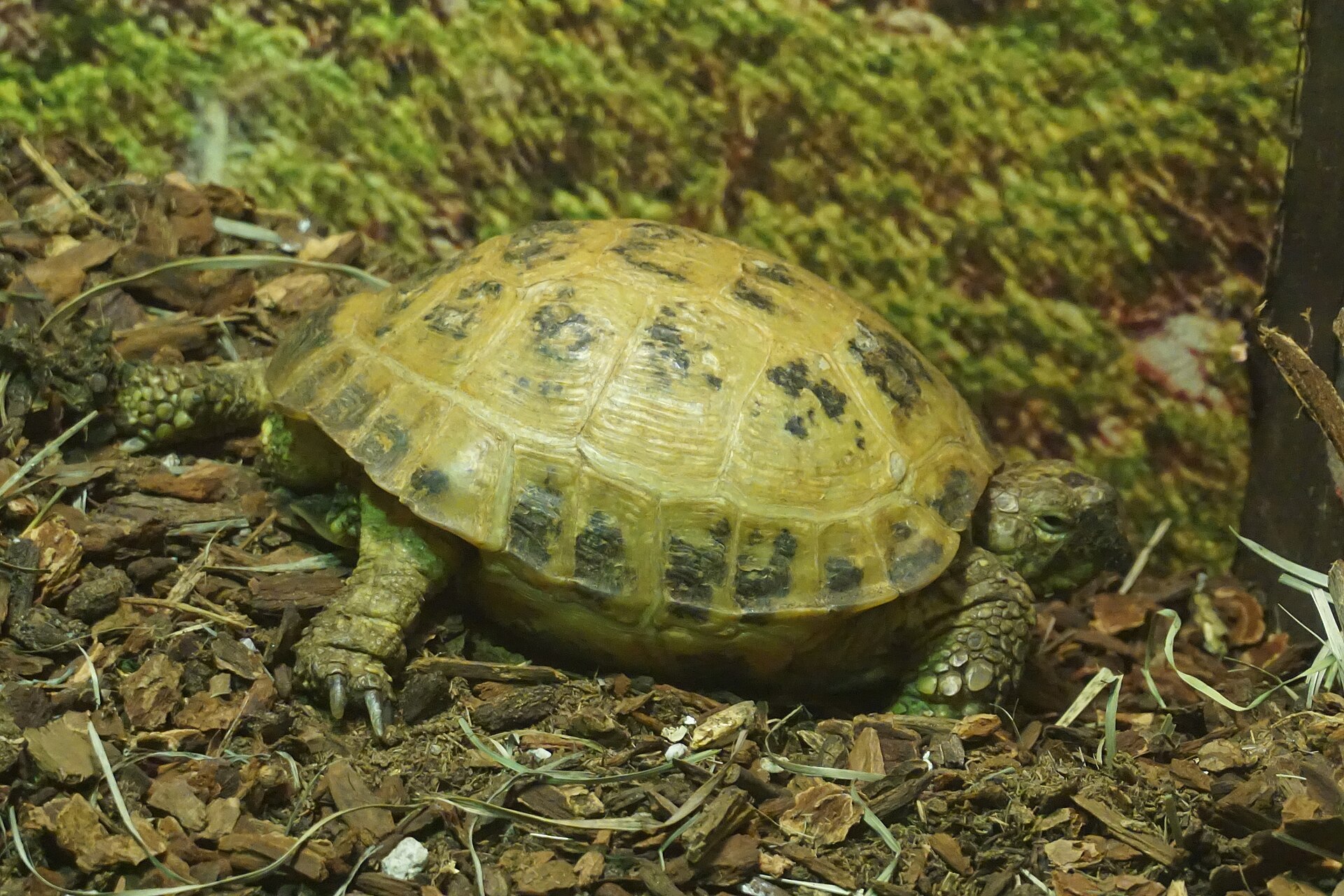
Russian Tortoise Care
Testudo horsfieldii
The most popular beginner tortoise, small enough for indoor setups yet long-lived at 50+ years, with a straightforward grass-and-weed herbivore diet and a preference for dry, warm conditions.
UVB Setup Calculator
Enter your enclosure dimensions — we'll recommend the right UVB bulb and mounting height for Russian Tortoise.
Russian Tortoise care specs
- Care level
- beginner
- Adult size
- 5–8 in
- Lifespan (yrs)
- 50+
- Basking (°F)
- 95–100
- Cool side / water (°F)
- 70–80
- UVB need
- high
- Target UVI (Ferguson)
- 3.0–4.0
- Humidity (%)
- 40–60
- Diet type
- herbivore
- Diet
- herbivore
- Min enclosure (adult)
- Indoor: minimum 6×2 ft floor space
- Housing
- Caution
- Price (USD)
- 100–300
- Origin
- Central Asia: arid steppes and semi-deserts of Afghanistan, Pakistan, Iran, Uzbekistan, Kazakhstan, and northwestern China
Where to buy & shop for Russian Tortoise
Affiliate links — we may earn a small commission at no cost to you.
What is a Russian Tortoise?
A Russian Tortoise is a beginner-friendly tortoise from Central Asia: arid steppes and semi-deserts of Afghanistan. Adults reach 5–8 in (males); 6–10 in (females larger); 1–3 lb and can live 50+ years in captivity — a long-term commitment. The most popular beginner tortoise, small enough for indoor setups yet long-lived at 50+ years, with a straightforward grass-and-weed herbivore diet and a preference for dry, warm conditions.
What size enclosure does a Russian Tortoise need?
The minimum enclosure for an adult Russian Tortoise is Indoor: minimum 6×2 ft floor space (12+ sq ft); 36+ sq ft preferred. Outdoor: minimum 4×4 ft (16 sq ft) per tortoise, walls buried 12 in and 12+ in above ground to prevent escapes; larger is always better. Outdoor in climate zones with warm dry summers is ideal.. Floor space is the priority for terrestrial tortoises. Adults typically need outdoor housing to meet roaming, thermoregulation, and grazing needs.
What you need:
- Outdoor enclosure (100+ sq ft) — adults need outdoor space; secure burrowing-proof walls.
- Warm shelter/hide — insulated box or heated indoor space for cool nights.
- Deep substrate — 6–12 in minimum for natural burrowing behaviour.
- Basking lamp + UVB — over the primary basking area; T5 HO 12% or 14% tube.
- Grazing area / browse — grasses, edible weeds; sunlight exposure is essential.
What temperature does a Russian Tortoise need?
Provide a basking spot of 95–100°F and a cool side of 70–80°F. Measure surface temperature with an infrared thermometer. Use a high-wattage basking bulb on a dimmer or thermostat — never a heat rock. Drop to 60–70°F at night to support digestion and immune function.
| Zone | Temperature |
|---|---|
| Basking spot | 95–100°F (measure surface temperature with an infrared thermometer) |
| Cool side | 70–80°F |
| Night | 60–70°F |
Do Russian Tortoises need UVB?
Yes — Russian Tortoises need high UVB (target UVI 3.0–4.0). Use a T5 HO 12–14% tube (e.g., Arcadia Desert 12% or Zoo Med ReptiSun 10.0) mounted directly above the basking spot. Use the UVB Calculator above to confirm mounting height and basking platform height. Verify with a Solarmeter 6.5 and replace bulbs every 12 months.
What humidity does a Russian Tortoise need?
Maintain humidity at 40–60%. Moderate humidity suits most commonly available substrates. Maintain a moist hide in one corner to support proper shedding. A digital hygrometer is essential.
What do Russian Tortoises eat?
Russian Tortoises are strict herbivores — grasses, hay, and edible weeds form the bulk of the diet. High-fiber, low-protein herbivore diet: broad-leaf plants, grasses, and weeds as the staple — dandelion (leaves, stems, flowers), plantain, mallow, clover, hay (orchard, timothy). Dark leafy greens (collard, mustard, turnip greens) as a supplement. Fruit very rarely as a treat (10% max). AVOID: spinach and high-oxalate foods (block calcium absorption), meat/protein foods, pelleted animal food. Calcium supplementation (cuttlebone or dusting) is important. Never offer any animal protein, insects, or rodents — these cause serious organ damage in herbivorous species.
- Grasses and hay — the bulk of the diet (Bermuda, orchard, timothy grass, timothy hay).
- Edible weeds and wildflowers — dandelion, plantain, clover, mallow.
- Dark leafy greens — collard, mustard, turnip greens in moderation.
- No animal protein — never offer insects, rodents, or any meat; causes serious organ damage.
- Fresh water daily — in a wide, shallow dish changed every day.
Can you house Russian Tortoises together?
Caution — males are territorial and can injure one another; females can be group-kept with sufficient space. Single-animal or same-sex female groups are safest. A male-female pair requires a large enough enclosure that the female can avoid the male. Highly territorial; 'one per enclosure' is the conservative recommendation. Start with brief, calm handling sessions (5–10 minutes) and gradually increase as your Russian Tortoise becomes accustomed to you. Wash hands before and after every handling session.
Are Russian Tortoises good for beginners?
Yes — Russian Tortoises are an excellent first reptile. Animals cost 100–300 (captive bred babies and adults); wild-caught adults occasionally sold cheaper but avoid — poorer health outcomes depending on morph/locality. The main ongoing costs are fresh greens, grasses/hay, calcium supplementation, UVB bulb replacements, and occasional vet visits.
What is a Russian Tortoise?
A Russian Tortoise is a beginner-friendly tortoise from Central Asia: arid steppes and semi-deserts of Afghanistan. Adults reach 5–8 in (males); 6–10 in (females larger); 1–3 lb and live 50+ years in captivity.
How big do Russian Tortoises get?
5–8 in (males); 6–10 in (females larger); 1–3 lb. Russian Tortoises reach this size over a lifespan of 50+ years — plan your enclosure for the adult size from the start.
What size enclosure does a Russian Tortoise need?
The minimum enclosure for an adult Russian Tortoise is Indoor: minimum 6×2 ft floor space (12+ sq ft); 36+ sq ft preferred. Outdoor: minimum 4×4 ft (16 sq ft) per tortoise, walls buried 12 in and 12+ in above ground to prevent escapes; larger is always better. Outdoor in climate zones with warm dry summers is ideal.. Bigger is always better — provide the adult-size enclosure from day one rather than upgrading later.
What temperature does a Russian Tortoise need?
Basking spot 95–100°F, cool side 70–80°F — measure with a digital thermometer. Night temperatures can drop to 60–70°F. Always measure with a reliable digital thermometer.
Do Russian Tortoises need UVB?
High UVB need. Russian Tortoises need high UVB. Target UVI: 3.0–4.0. Use a T5 HO 12–14% tube and verify with a Solarmeter 6.5.
What do Russian Tortoises eat?
High-fiber, low-protein herbivore diet: broad-leaf plants, grasses, and weeds as the staple — dandelion (leaves, stems, flowers), plantain, mallow, clover, hay (orchard, timothy). Dark leafy greens (collard, mustard, turnip greens) as a supplement. Fruit very rarely as a treat (10% max). AVOID: spinach and high-oxalate foods (block calcium absorption), meat/protein foods, pelleted animal food. Calcium supplementation (cuttlebone or dusting) is important.
Can you house Russian Tortoises together?
Caution — males are territorial and can injure one another; females can be group-kept with sufficient space. Single-animal or same-sex female groups are safest. A male-female pair requires a large enough enclosure that the female can avoid the male. Highly territorial; 'one per enclosure' is the conservative recommendation.
Are Russian Tortoises good for beginners?
Yes — Russian Tortoises are among the best reptiles for first-time keepers. They are forgiving, handleable, and readily available captive-bred.
How long do Russian Tortoises live?
50+ years in captivity with proper care. This is a significant long-term commitment — factor that in before purchasing.
Sources
- https://thetortoisespot.com/care-guides/russian-tortoise/
- https://reptiledirect.com/russian-tortoise/
- https://dubiaroaches.com/blogs/tortoise-care/russian-tortoise-care-sheet
- https://www.morereptiles.com/russian-tortoise/
- https://www.reptilecentre.com/blogs/reptile-blog/which-ferguson-zone-is-my-reptile-in
- https://www.russiantortoise.org/care_sheet.htm
- https://tortoiseresourcecenter.com/how-much-does-a-tortoise-cost/