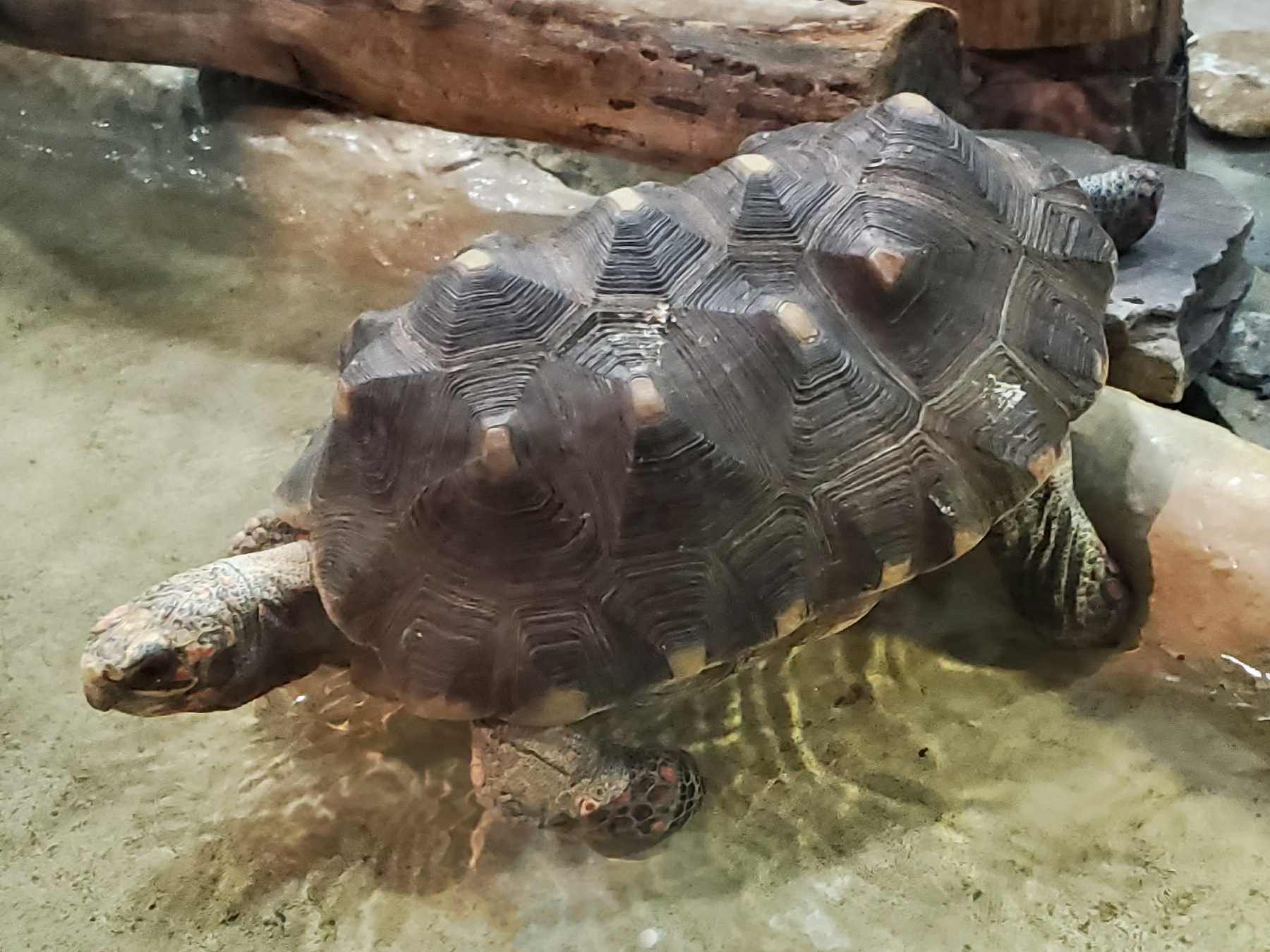
Red-Footed Tortoise Care
Chelonoidis carbonarius
The only commonly kept tortoise that is a true omnivore — red-footeds require fruit and animal protein alongside greens, thrive in high humidity (70–80%), and make engaging, medium-sized pets with a 50+ year lifespan.
UVB Setup Calculator
Enter your enclosure dimensions — we'll recommend the right UVB bulb and mounting height for Red-Footed Tortoise.
Red-Footed Tortoise care specs
- Care level
- intermediate
- Adult size
- 10–14 in shell length
- Lifespan (yrs)
- 50+
- Basking (°F)
- 90–95
- Cool side / water (°F)
- 75–80
- UVB need
- high
- Target UVI (Ferguson)
- 2.0–3.0
- Humidity (%)
- 70–80 adults
- Diet type
- omnivore
- Diet
- omnivore
- Min enclosure (adult)
- Indoor minimum: 24 sq ft
- Housing
- Generally tolerant of conspecifics with sufficient space
- Price (USD)
- 150–400
- Origin
- South America
Where to buy & shop for Red-Footed Tortoise
Affiliate links — we may earn a small commission at no cost to you.
What is a Red-Footed Tortoise?
A Red-Footed Tortoise is a intermediate-level tortoise from South America — lowland tropical rainforests. Adults reach 10–14 in shell length (females typically 10–12 in; males 12–14 in); 8–20 lb — females lighter, males heavier and can live 50+ years in captivity — a long-term commitment. The only commonly kept tortoise that is a true omnivore — red-footeds require fruit and animal protein alongside greens, thrive in high humidity (70–80%), and make engaging, medium-sized pets with a 50+ year lifespan.
What size enclosure does a Red-Footed Tortoise need?
The minimum enclosure for an adult Red-Footed Tortoise is Indoor minimum: 24 sq ft (6×4 ft) for one adult, 8-in+ walls, full-closure or semi-closed top to hold humidity. Outdoor preferred in USDA zones 9b+ (tropical/subtropical climates) with humid hide and shelter; outdoor pen minimum 4×8 ft. Substrate 4–6 in deep for digging. Multiple hides required. Adequate humidity throughout is more critical than size alone.. Floor space is the priority for terrestrial tortoises. Adults typically need outdoor housing to meet roaming, thermoregulation, and grazing needs.
What you need:
- Outdoor enclosure (100+ sq ft) — adults need outdoor space; secure burrowing-proof walls.
- Warm shelter/hide — insulated box or heated indoor space for cool nights.
- Deep substrate — 6–12 in minimum for natural burrowing behaviour.
- Basking lamp + UVB — over the primary basking area; T5 HO 12% or 14% tube.
- Grazing area / browse — grasses, edible weeds; sunlight exposure is essential.
What temperature does a Red-Footed Tortoise need?
Provide a basking spot of 90–95°F and a cool side of 75–80°F. Measure surface temperature with an infrared thermometer. Use a high-wattage basking bulb on a dimmer or thermostat — never a heat rock. Drop to 70–75°F at night to support digestion and immune function.
| Zone | Temperature |
|---|---|
| Basking spot | 90–95°F (measure surface temperature with an infrared thermometer) |
| Cool side | 75–80°F |
| Night | 70–75°F |
Do Red-Footed Tortoises need UVB?
Yes — Red-Footed Tortoises need high UVB (target UVI 2.0–3.0). Use a T5 HO 12–14% tube (e.g., Arcadia Desert 12% or Zoo Med ReptiSun 10.0) mounted directly above the basking spot. Use the UVB Calculator above to confirm mounting height and basking platform height. Verify with a Solarmeter 6.5 and replace bulbs every 12 months.
What humidity does a Red-Footed Tortoise need?
Maintain humidity at 70–80 adults%. High-humidity species benefit from a humid hide and daily misting. Good ventilation is essential — stagnant humid air causes respiratory infections and scale rot. Maintain a moist hide in one corner to support proper shedding. A digital hygrometer is essential.
What do Red-Footed Tortoises eat?
Red-Footed Tortoises are omnivores — diet composition changes significantly with age. True omnivore — the key distinction from all other commonly kept tortoises: ~70% leafy greens/vegetables/flowers/weeds (dandelion, collard, turnip greens, kale, endive, hibiscus, grape leaves) + ~15–20% fruit (berries, papaya, melons, mango) + ~10–15% animal protein (earthworms, dubia roaches, crickets, hornworms, black soldier fly larvae; small amounts of snails or boiled egg occasionally). Protein fed ~1×/week; fruit ~2×/week. Calcium supplementation (phosphorus-free) essential. AVOID: spinach, high-oxalate foods, avocado, rhubarb. Do NOT eliminate fruit and protein — this species evolved as an opportunistic omnivore and requires dietary variety.
Can you house Red-Footed Tortoises together?
Generally tolerant of conspecifics with sufficient space; add approximately 16 sq ft per additional tortoise. Males may show mild competition but rarely injure each other. Do NOT mix with other tortoise species — interspecies disease transmission risk. Monitor for bullying during feeding. Allow new animals at least 2 weeks to settle in before handling. Support the body fully — avoid grabbing from above, which triggers a defensive response.
Are Red-Footed Tortoises good for beginners?
Red-Footed Tortoises are intermediate-level — not ideal for complete beginners. Suitable for keepers who have successfully maintained a beginner reptile for at least a year. Animals typically cost 150–400 (captive-bred hatchlings, most common range); well-started yearlings 250–500; adults 400–800. Cherry-head red-footed tortoises (Chelonoidis carbonarius carbonarius — Brazilian locality) typically command a slight premium.. Budget for quality enclosure hardware — this species will show you quickly if something is wrong.
What is a Red-Footed Tortoise?
A Red-Footed Tortoise is a intermediate-level tortoise from South America — lowland tropical rainforests. Adults reach 10–14 in shell length (females typically 10–12 in; males 12–14 in); 8–20 lb — females lighter, males heavier and live 50+ years in captivity.
How big do Red-Footed Tortoises get?
10–14 in shell length (females typically 10–12 in; males 12–14 in); 8–20 lb — females lighter, males heavier. Red-Footed Tortoises reach this size over a lifespan of 50+ years — plan your enclosure for the adult size from the start.
What size enclosure does a Red-Footed Tortoise need?
The minimum enclosure for an adult Red-Footed Tortoise is Indoor minimum: 24 sq ft (6×4 ft) for one adult, 8-in+ walls, full-closure or semi-closed top to hold humidity. Outdoor preferred in USDA zones 9b+ (tropical/subtropical climates) with humid hide and shelter; outdoor pen minimum 4×8 ft. Substrate 4–6 in deep for digging. Multiple hides required. Adequate humidity throughout is more critical than size alone.. Bigger is always better — provide the adult-size enclosure from day one rather than upgrading later.
What temperature does a Red-Footed Tortoise need?
Basking spot 90–95°F, cool side 75–80°F — measure with a digital thermometer. Night temperatures can drop to 70–75°F. Always measure with a reliable digital thermometer.
Do Red-Footed Tortoises need UVB?
High UVB need. Red-Footed Tortoises need high UVB. Target UVI: 2.0–3.0. Use a T5 HO 12–14% tube and verify with a Solarmeter 6.5.
What do Red-Footed Tortoises eat?
True omnivore — the key distinction from all other commonly kept tortoises: ~70% leafy greens/vegetables/flowers/weeds (dandelion, collard, turnip greens, kale, endive, hibiscus, grape leaves) + ~15–20% fruit (berries, papaya, melons, mango) + ~10–15% animal protein (earthworms, dubia roaches, crickets, hornworms, black soldier fly larvae; small amounts of snails or boiled egg occasionally). Protein fed ~1×/week; fruit ~2×/week. Calcium supplementation (phosphorus-free) essential. AVOID: spinach, high-oxalate foods, avocado, rhubarb. Do NOT eliminate fruit and protein — this species evolved as an opportunistic omnivore and requires dietary variety.
Can you house Red-Footed Tortoises together?
Generally tolerant of conspecifics with sufficient space; add approximately 16 sq ft per additional tortoise. Males may show mild competition but rarely injure each other. Do NOT mix with other tortoise species — interspecies disease transmission risk. Monitor for bullying during feeding.
Are Red-Footed Tortoises good for beginners?
Intermediate — Red-Footed Tortoises need a keeper who has already successfully maintained a simpler reptile. Not ideal as a first reptile.
How long do Red-Footed Tortoises live?
50+ years in captivity with proper care. This is a significant long-term commitment — factor that in before purchasing.