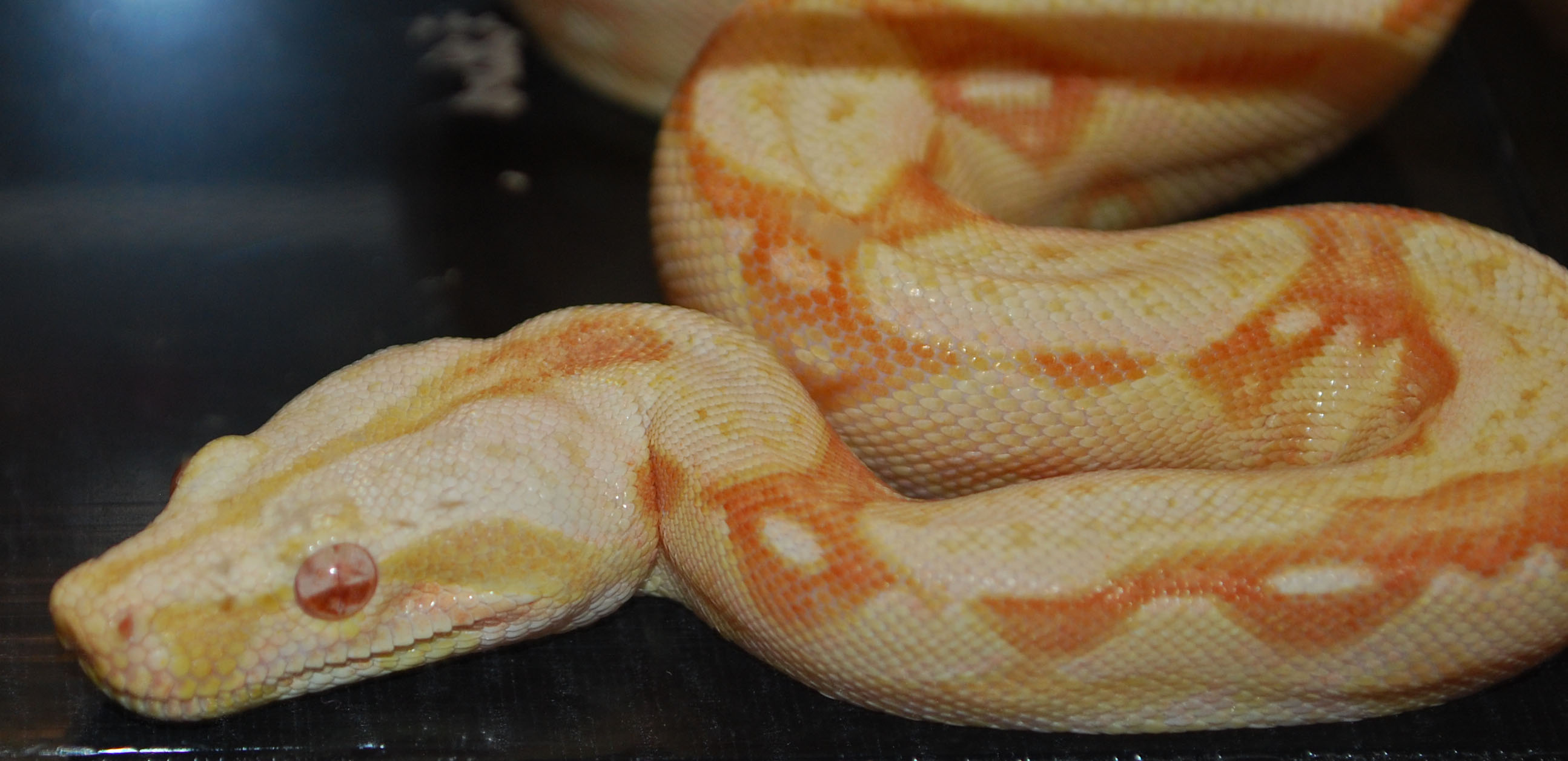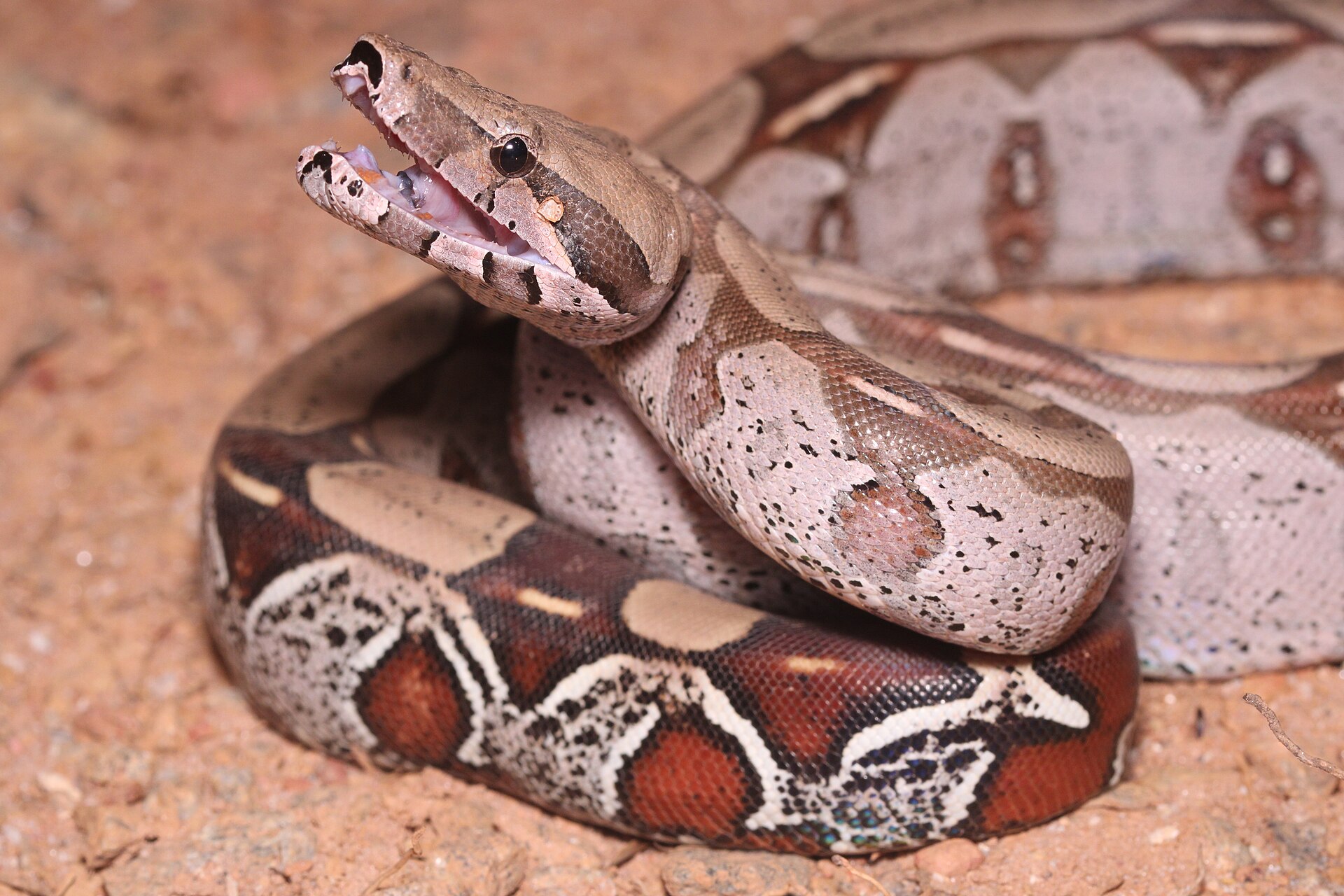
Photo: Arnaud Aury (CC BY 4.0)
Boa Constrictor Care
Boa constrictor
Boa constrictors are powerful, long-lived constrictors that reward patient keepers with calm temperament but demand significant enclosure space and 30+ year commitment as they reach adult size.
UVB Setup Calculator
Enter your enclosure dimensions — we'll recommend the right UVB bulb and mounting height for Boa Constrictor.
Boa Constrictor care specs
- Care level
- intermediate
- Adult size
- 5–10 ft
- Lifespan (yrs)
- 25–40
- Warm side (°F)
- 90–95
- Cool side (°F)
- 75–80
- Humidity (%)
- 55–75
- UVB
- low
- Diet
- carnivore
- Min enclosure (adult)
- 6×2×2 ft minimum for average-sized adults
- Housing
- solitary
- Price (USD)
- 100–200
- Origin
- Central America, South America
Where to buy & shop for Boa Constrictor
Affiliate links — we may earn a small commission at no cost to you.
What is a Boa Constrictor?
A Boa Constrictor is a intermediate-level snake from Central America. Adults reach 5–10 ft (common boas / BCI average 5–8 ft; true red-tails up to 10–12 ft) and can live 25–40 years in captivity — a long-term commitment. Boa constrictors are powerful, long-lived constrictors that reward patient keepers with calm temperament but demand significant enclosure space and 30+ year commitment as they reach adult size.
What size enclosure does a Boa Constrictor need?
The minimum enclosure for an adult Boa Constrictor is 6×2×2 ft minimum for average-sized adults; larger for large females. Bigger is always better — Boa Constrictors benefit from extra space to thermoregulate and express natural behaviours.
What you need:
- Secure enclosure with tight lid — snakes are escape artists; latches or locks required.
- Thermostat-controlled heat source — under-tank mat, radiant heat panel, or ceramic heat emitter.
- Two hides minimum — one on the warm side, one on the cool side (security reduces stress).
- Water bowl — large enough to soak in; changed frequently.
- Appropriate substrate — aspen, coconut fiber, or bioactive blend; adequate depth to burrow.
What temperature does a Boa Constrictor need?
Boa Constrictors need a thermal gradient: warm side 90–95°F, cool side 75–80°F. Use an under-tank heat mat, ceramic heat emitter, or radiant heat panel — all on a thermostat. Measure with a digital thermometer, not the stick-on strip gauges. Temperatures can drop to 70–80°F at night.
| Zone | Temperature |
|---|---|
| Warm side | 90–95°F |
| Cool side | 75–80°F |
| Night | 70–80°F |
Do Boa Constrictors need UVB?
Boa Constrictors need low UVB — target UVI 1–2. A T5 HO 5–6% tube (e.g., Arcadia ShadeDweller) is recommended over supplementation alone. Use the UVB Calculator above to find the correct bulb and mounting height. Replace bulbs every 12 months regardless of whether they still emit visible light.
What humidity does a Boa Constrictor need?
Maintain humidity at 55–75%. Moderate humidity suits most commonly available substrates. Maintain a moist hide in one corner to support proper shedding. A digital hygrometer is essential.
What do Boa Constrictors eat?
Boa Constrictors are carnivores that eat whole prey — primarily mice and rats. Appropriately-sized whole prey (rats, rabbits for large adults); juveniles every 10–14 days, adults every 4–8 weeks; prey ~10% of body weight Always offer prey frozen-thawed. Feed juveniles more frequently than adults; established adults can go weeks between meals without issue.
- Whole prey — appropriately sized mice, rats, or other whole prey items.
- Frozen-thawed preferred — never feed live prey; live prey can injure your Boa Constrictor.
- Feeding frequency — juveniles every 5–7 days; adults every 1–4 weeks depending on size.
- No supplementation needed — whole prey provides complete nutrition; no dusting required.
Can you house Boa Constrictors together?
solitary — house individually Allow new animals at least 2 weeks to settle in before handling. Support the body fully — avoid grabbing from above, which triggers a defensive response.
Are Boa Constrictors good for beginners?
Boa Constrictors are intermediate-level — not ideal for complete beginners. Suitable for keepers who have successfully maintained a beginner reptile for at least a year. Animals typically cost 100–200 (normal localities), morphs 200–2,000+. Budget for quality enclosure hardware — this species will show you quickly if something is wrong.
What is a Boa Constrictor?
A Boa Constrictor is a intermediate-level snake from Central America. Adults reach 5–10 ft (common boas / BCI average 5–8 ft; true red-tails up to 10–12 ft) and live 25–40 years in captivity.
How big do Boa Constrictors get?
5–10 ft (common boas / BCI average 5–8 ft; true red-tails up to 10–12 ft). Boa Constrictors reach this size over a lifespan of 25–40 years — plan your enclosure for the adult size from the start.
What size enclosure does a Boa Constrictor need?
The minimum enclosure for an adult Boa Constrictor is 6×2×2 ft minimum for average-sized adults; larger for large females. Bigger is always better — provide the adult-size enclosure from day one rather than upgrading later.
What temperature does a Boa Constrictor need?
Warm side 90–95°F, cool side 75–80°F — always on a thermostat. Night temperatures can drop to 70–80°F. Always measure with a reliable digital thermometer.
Do Boa Constrictors need UVB?
Low UVB need. Boa Constrictors benefit from a low-output T5 HO UVB bulb (5–6%). Target UVI: 1–2 at the basking spot, measured with a Solarmeter 6.5.
What do Boa Constrictors eat?
Appropriately-sized whole prey (rats, rabbits for large adults); juveniles every 10–14 days, adults every 4–8 weeks; prey ~10% of body weight Always offer prey pre-killed or frozen-thawed — never live.
Can you house Boa Constrictors together?
Solitary — house individually
Are Boa Constrictors good for beginners?
Intermediate — Boa Constrictors need a keeper who has already successfully maintained a simpler reptile. Not ideal as a first reptile.
How long do Boa Constrictors live?
25–40 years in captivity with proper care. This is a significant long-term commitment — factor that in before purchasing.