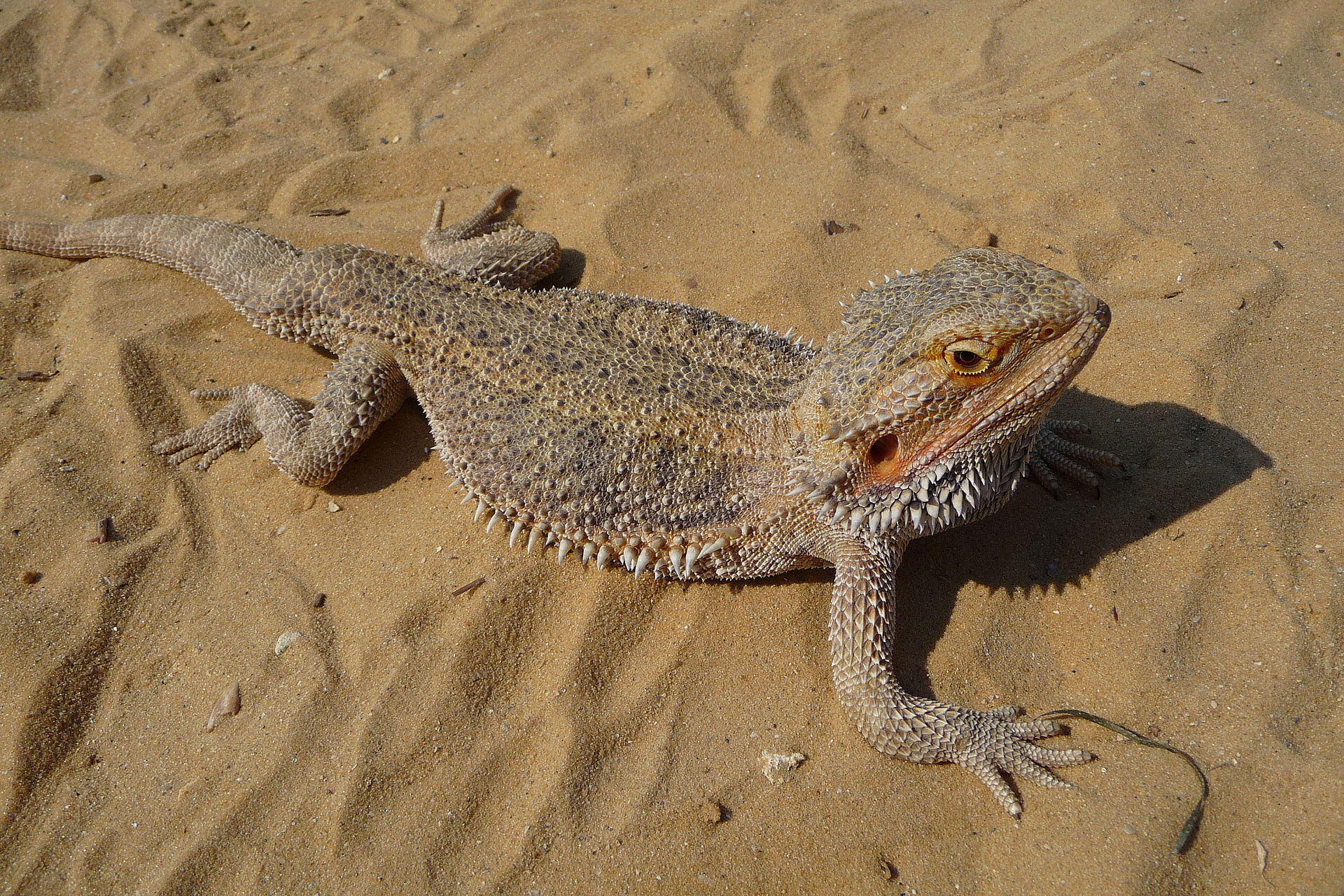
Bearded Dragon Care
Pogona vitticeps
The definitive beginner lizard — a hardy, personable omnivore from arid Australia that thrives with a hot basking spot, high UVB, and a diet that shifts from insect-heavy as a juvenile to mostly leafy greens as an adult.
UVB Setup Calculator
Enter your enclosure dimensions — we'll recommend the right UVB bulb and mounting height for Bearded Dragon.
Bearded Dragon care specs
- Care level
- beginner
- Adult size
- 18–24 in
- Lifespan (yrs)
- 10–15
- Basking (°F)
- 105–115
- Cool side (°F)
- 70–85
- UVB need
- high
- Target UVI (Ferguson)
- 4.0–6.0
- Humidity (%)
- 30–60
- Diet type
- omnivore
- Diet
- omnivore
- Min enclosure (adult)
- 4×2×2 ft
- Housing
- Solitary
- Price (USD)
- 40–100
- Origin
- Arid scrublands, grasslands, and semi-desert of eastern and central Australia
Where to buy & shop for Bearded Dragon
Affiliate links — we may earn a small commission at no cost to you.
What is a Bearded Dragon?
A Bearded Dragon is a beginner-friendly lizard from scrublands. Adults reach 18–24 in and can live 10–15 years in captivity — a long-term commitment. The definitive beginner lizard — a hardy, personable omnivore from arid Australia that thrives with a hot basking spot, high UVB, and a diet that shifts from insect-heavy as a juvenile to mostly leafy greens as an adult.
What size enclosure does a Bearded Dragon need?
The minimum enclosure for an adult Bearded Dragon is 4×2×2 ft (48×24×24 in; 120-gallon equivalent). Bigger is always better — Bearded Dragons benefit from extra space to thermoregulate and express natural behaviours.
What you need:
- Secure, well-ventilated enclosure — screen top or side ventilation; tight-fitting lid.
- Thermostat-controlled basking lamp — dimmer or proportional thermostat; never a heat rock.
- Warm and cool hides — at least one hide on each end of the thermal gradient.
- Water bowl — shallow, heavy-bottomed; changed daily.
- Appropriate substrate — species-appropriate depth; moist hide in one corner.
What temperature does a Bearded Dragon need?
Provide a basking spot of 105–115°F and a cool side of 70–85°F. Measure surface temperature with an infrared thermometer. Use a high-wattage basking bulb on a dimmer or thermostat — never a heat rock. Drop to 60–78°F at night to support digestion and immune function.
| Zone | Temperature |
|---|---|
| Basking spot | 105–115°F (measure surface temperature with an infrared thermometer) |
| Cool side | 70–85°F |
| Night | 60–78°F |
Do Bearded Dragons need UVB?
Yes — Bearded Dragons need high UVB (target UVI 4.0–6.0). Use a T5 HO 12–14% tube (e.g., Arcadia Desert 12% or Zoo Med ReptiSun 10.0) mounted directly above the basking spot. Use the UVB Calculator above to confirm mounting height and basking platform height. Verify with a Solarmeter 6.5 and replace bulbs every 12 months.
What humidity does a Bearded Dragon need?
Maintain humidity at 30–60%. Keep the enclosure on the drier side. Use a digital hygrometer — guessing humidity is a common beginner mistake that leads to respiratory problems and dysecdysis (difficult shedding). A digital hygrometer is essential.
What do Bearded Dragons eat?
Bearded Dragons are omnivores — diet composition changes significantly with age. Hatchlings (0–6 mo): insects 2× daily + daily greens; ~60–80% protein. Juveniles (6–12 mo): insects 1× daily + greens; ~50–60% protein. Adults (12+ mo): insects 1–2× weekly + daily leafy greens/veg; ~20–30% protein. Staple feeders: dubia roaches, crickets, hornworms; staple greens: collard, dandelion, mustard greens. Dust insects with calcium+D3; multivitamin weekly on salads.
| Age | Diet | Frequency |
|---|---|---|
| Hatchling (0–6 mo) | insects + daily greens | 2× daily |
| Juvenile (6–12 mo) | insects + greens | 1× daily |
| Adult (12+ mo) | insects + daily leafy greens/veg | 1–2× weekly |
Can you house Bearded Dragons together?
Solitary — house individually. Highly territorial; cohabitation causes chronic stress, injury, and death. Start with brief, calm handling sessions (5–10 minutes) and gradually increase as your Bearded Dragon becomes accustomed to you. Wash hands before and after every handling session.
Are Bearded Dragons good for beginners?
Yes — Bearded Dragons are an excellent first reptile. Animals cost 40–100 (normal/wild-type); common morphs 100–300; rare designer morphs 300–1,000+ depending on morph/locality. The main ongoing costs are varied diet items (insects, produce, or commercial diet), UVB bulb replacements, and occasional vet visits.
What is a Bearded Dragon?
A Bearded Dragon is a beginner-friendly lizard from scrublands. Adults reach 18–24 in and live 10–15 years in captivity.
How big do Bearded Dragons get?
18–24 in. Bearded Dragons reach this size over a lifespan of 10–15 years — plan your enclosure for the adult size from the start.
What size enclosure does a Bearded Dragon need?
The minimum enclosure for an adult Bearded Dragon is 4×2×2 ft (48×24×24 in; 120-gallon equivalent). Bigger is always better — provide the adult-size enclosure from day one rather than upgrading later.
What temperature does a Bearded Dragon need?
Basking spot 105–115°F, cool side 70–85°F — measure with a digital thermometer. Night temperatures can drop to 60–78°F. Always measure with a reliable digital thermometer.
Do Bearded Dragons need UVB?
High UVB need. Bearded Dragons need high UVB. Target UVI: 4.0–6.0. Use a T5 HO 12–14% tube and verify with a Solarmeter 6.5.
What do Bearded Dragons eat?
Hatchlings (0–6 mo): insects 2× daily + daily greens; ~60–80% protein. Juveniles (6–12 mo): insects 1× daily + greens; ~50–60% protein. Adults (12+ mo): insects 1–2× weekly + daily leafy greens/veg; ~20–30% protein. Staple feeders: dubia roaches, crickets, hornworms; staple greens: collard, dandelion, mustard greens. Dust insects with calcium+D3; multivitamin weekly on salads.
Can you house Bearded Dragons together?
Solitary — house individually. Highly territorial; cohabitation causes chronic stress, injury, and death.
Are Bearded Dragons good for beginners?
Yes — Bearded Dragons are among the best reptiles for first-time keepers. They are forgiving, handleable, and readily available captive-bred.
How long do Bearded Dragons live?
10–15 years in captivity with proper care. This is a significant long-term commitment — factor that in before purchasing.
Sources
- https://www.zenhabitats.com/blogs/reptile-care-sheets-resources/bearded-dragon-care-sheet-reptifiles
- https://dubiaroaches.com/blogs/lizard-care/bearded-dragon-care-sheet
- https://reptilesandresearch.org/care-sheets/bearded-dragon-care-sheet
- https://www.reptilecentre.com/blogs/reptile-blog/which-ferguson-zone-is-my-reptile-in
- https://reptifiles.com/bearded-dragon-care/bearded-dragon-temperatures-uvb/